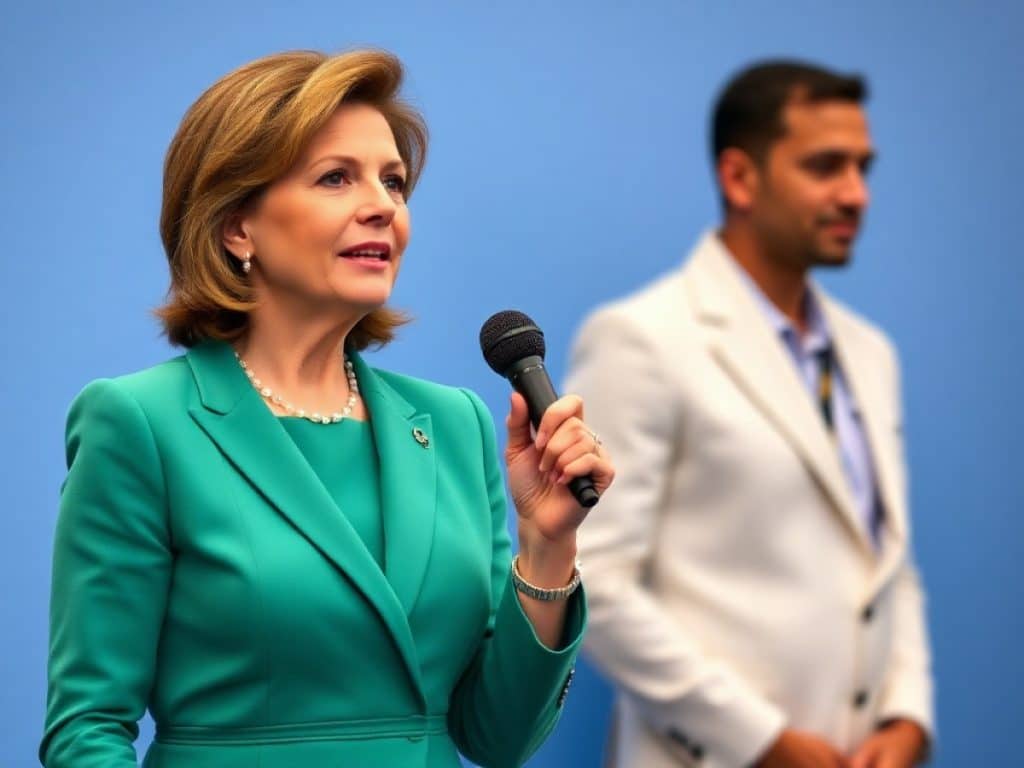
In a world where stability is often seen as the cornerstone of economic health, the recent comments by International Monetary Fund (IMF) Managing Director Kristalina Georgieva in Montevideo, Uruguay, served as a potent reminder that stability alone is not enough to secure future prosperity. During her speech at the annual economics conference organized by the Central Bank of Uruguay, Georgieva lauded the nation for its macroeconomic and institutional strengths. However, she emphasized the need for increased risk-taking to harness these stable foundations into tangible growth. This perspective is particularly poignant in today’s global economic climate, where each decision can ripple across continents with unforeseen consequences.
Georgieva’s insights included a compelling analogy: “Stability cannot be put in a refrigerator,” she declared, signaling that static conditions could not sustain or advance an economy. She argued that while Uruguay has built a commendable platform of stability, it is the transformative actions that will truly enable the country to purchase “a house”—a metaphor for achieving substantial economic progress and well-being for its citizens. This holistic approach to economic development, considering both internal strengths and the new challenges of a shifting global landscape, sets a valuable framework for understanding her broader economic vision.
Uruguay’s Economic Foundations and Future Challenges
Current Achievements and Strengths
- Public debt management: With public debt around 60% of GDP, Uruguay maintains a relatively stable fiscal policy compared to global standards.
- Renewable energy: An impressive 98% of the country’s electricity matrix is sourced from renewable energies.
- Social consensus: Georgieva highlighted the broad agreement within Uruguayan policy-making as a pivotal asset in a world drifting towards polarization.
Areas for Growth and Improvement
- Enhancing logistics capabilities to serve not just Uruguay but also neighboring countries.
- Increasing cost efficiency in public services to streamline operations and reduce overheads.
- Simplifying procedures for small and medium-sized enterprises to foster entrepreneurship and innovation.
- Adapting to technological advancements such as artificial intelligence, which is poised to impact up to 40% of jobs worldwide.
Advisory on Monetary Policies and Economic Strategies
Georgieva commended Uruguay on its progress in reducing inflation to 4.5% and stabilizing economic expectations. However, she cautioned against hastily setting lower inflation targets amidst ongoing external shocks, particularly in energy prices. She also supported the central bank’s strategy towards de-dollarization, advocating for a stronger reliance on the national currency to enhance resilience against uncontrollable external shocks. Encouraging the saving in pesos through better returns was one of her specific recommendations.
Global Economic Outlook and Implications for Uruguay
The IMF chief painted a picture of a global economy in transition, moving from a predictable order towards a system with multiple power centers. She warned that rising protectionism and trade fragmentation could potentially reduce global output by up to 7%. In the context of such global shifts, Georgieva identified several sources of vulnerability, including ongoing conflicts and geopolitical tensions that could impact economic stability worldwide.
Opportunities for Regional Integration in Latin America
Latin America, according to Georgieva, stands at a crossroads with a unique chance to realize its economic potential through enhanced regional integration. This approach not only promises economic benefits but also strengthens political and social ties, contributing to a more stable and prosperous region.
Through her comprehensive review and forward-looking statements, Kristalina Georgieva offered a roadmap not just for Uruguay but for countries around the world grappling with the balance between stability and growth in an increasingly complex global environment. Her visit, described by Economy Minister Gabriel Oddone as politically significant, underscores the importance of Uruguay in the broader economic landscape of Latin America and the world.
Similar Posts
- IMF Chief Lands in Montevideo: High-Stakes Economic Talks Begin with Orsi
- Latin America’s Top Investment Bank Eyes Uruguay: Acquires HSBC Unit to Establish Regional Hub
- IMF Report: Global Public Debt Approaches Historic Peak!
- Paraguay’s Guaraní Tops Regional Stability: Bloomberg Reveals Strongest Currency
- IMF’s Top Economist Analyzes: What’s Happening with the Western Hemisphere’s Economy?

Gavin Turner is a crypto market analyst with over seven years studying price fluctuations and trading volumes in the United States. He provides detailed reports on sector trends and key indicators to help you anticipate market moves. His rigorous methodology and reliable forecasts guide you in refining your crypto trading strategies.