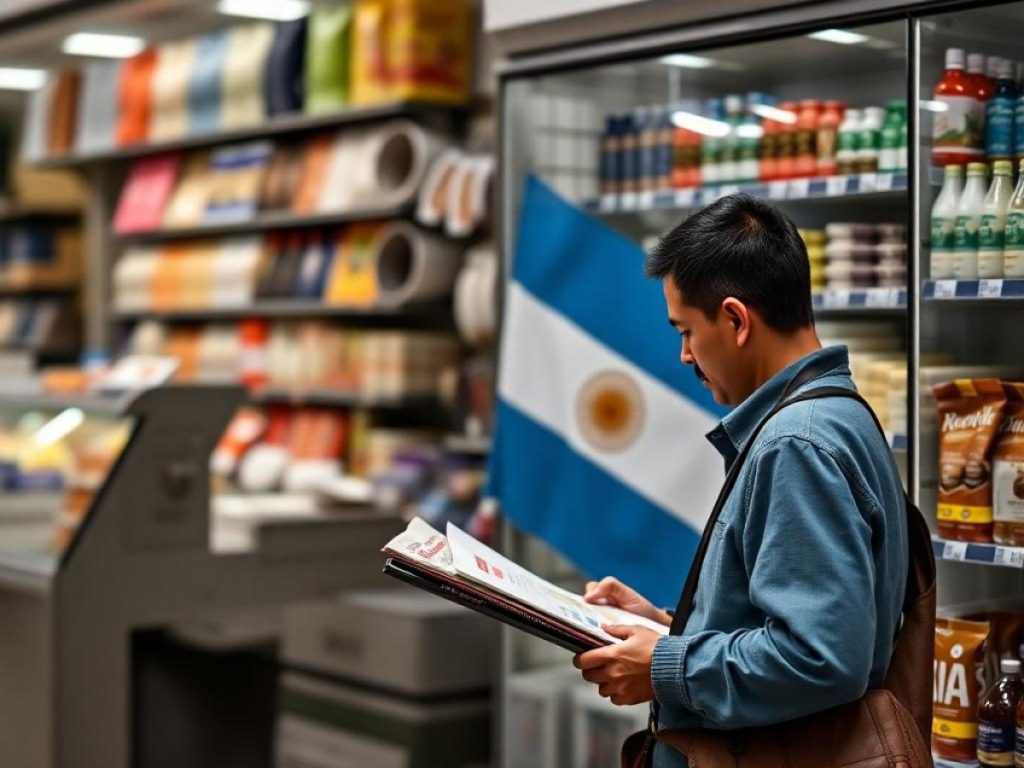
Navigating through the economic waves with a steadier grip than anticipated, Argentina has reported an inflation rate of 1.9% for August. This update, coming from the National Institute of Statistics and Censuses (Indec), suggests a continued trend of deceleration in price increases across the country. Despite the recent upheavals in both political and economic spheres, and a notable rise in the US dollar, retail prices have remained surprisingly stable. This intriguing development presents a rich tapestry of outcomes in various sectors, influencing everything from daily consumer goods to broader economic strategies.
Breaking Down the Numbers
In August, the Consumer Price Index (CPI) demonstrated a cumulative increase of 19.5% since the beginning of the year, climbing to 33.6% on a year-over-year basis. The data reveals some interesting sector-specific trends:
– Transportation saw the highest monthly increase at 3.6%, primarily due to rising vehicle and fuel costs.
– Alcoholic Beverages and Tobacco followed closely with a 3.5% increase, mostly propelled by higher cigarette prices.
– Conversely, Clothing and Footwear experienced a slight decline of 0.3%.
– Recreation and Culture sectors had a modest rise of 0.5%.
Impact of the Dollar and Market Predictions
Despite fears that the surging dollar might inflate retail prices significantly, the impact was less severe than many had forecasted. Prior to the release of these figures, financial analysts and consulting firms engaged in the Central Bank’s Market Expectations Survey (REM) had anticipated a slightly higher inflation rate of 2.1% for the month.
Price Categories in Focus
Price changes were not uniform across all categories:
– Regulated Prices led the increases at 2.7%.
– Core CPI which excludes volatile items like food and energy, rose by 2.0%.
– In contrast, Seasonal Prices saw a decrease of 0.8%, especially noticeable in clothing and some tourist services.
Looking Ahead
The economic landscape of Argentina remains a complex puzzle, influenced by both domestic and international factors. The resilience shown in the August inflation figures gives a glimpse into the adaptive strategies of businesses and the government amidst ongoing challenges. However, the path forward is layered with potential shifts in policy and market reactions, keeping economists and citizens alike keenly watching the horizon for what the future may hold in this vibrant South American nation.
Similar Posts
- Argentina’s Inflation Hits 2.5% in November: Economic Impact Deepens!
- Brazil’s Inflation Hits 4.39% in April: Spike Driven by Rising Food and Drug Prices
- Argentina’s Inflation Soars: October Figures Up 2.3% According to Indec
- Skyrocketing Prices: Argentina’s January Inflation Soars to 2.9%, Annual Rate Hits 32.4%!
- Uruguay’s Inflation Drops Again: See the Latest Year-over-Year Figures!

Gavin Turner is a crypto market analyst with over seven years studying price fluctuations and trading volumes in the United States. He provides detailed reports on sector trends and key indicators to help you anticipate market moves. His rigorous methodology and reliable forecasts guide you in refining your crypto trading strategies.