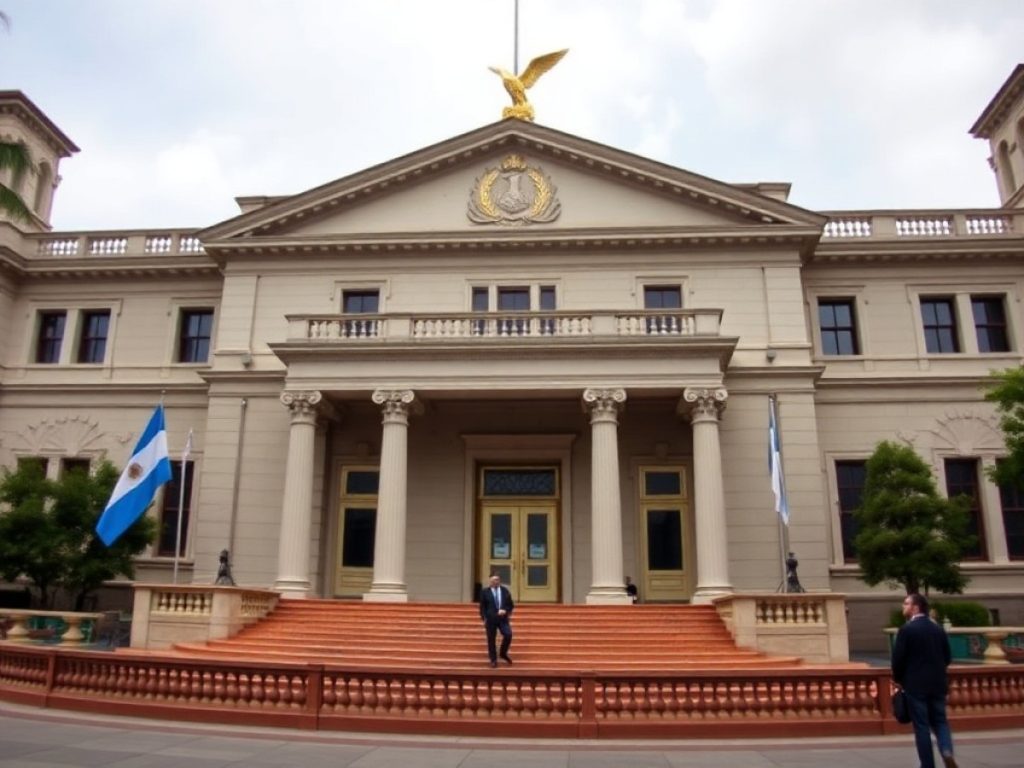
As Argentina grapples with economic challenges, a significant reform bill targeting the central bank’s operational framework has been tabled in the Chamber of Deputies. Introduced by the executive branch just a day after President Javier Milei highlighted its features in a national address, the bill is poised to transform how the central bank functions, aligning it more closely with a singular goal: the preservation of the currency’s value. This overhaul, which is scheduled for debate and potentially passage in August, marks a pivotal shift away from the multi-faceted mandate that has been in place since 2012.
Core Changes to the Central Bank’s Mandate
The proposed legislation is structured around six main pillars, each designed to streamline and specify the central bank’s responsibilities. The most striking shift is the modification of the central bank’s primary objective. The new directive would be to solely focus on maintaining the currency’s value, a significant pivot from its current broader mandate which includes financial stability, employment, and equitable economic development.
– **First Pillar**: Redefinition of the central bank’s primary mission.
– **Second Pillar**: Introduction of stringent criteria for the removal of board members.
– **Third Pillar**: Prohibition of the central bank’s financial support to the public sector.
– **Fourth Pillar**: Restrictions on the distribution of profits.
– **Remaining Pillars**: Cleanup of the balance sheet and updates to operational and reserve regulations.
Strengthened Governance and Accountability
The reform aims to enhance the governance of the central bank by setting specific conditions under which board members can be removed. These include serious and manifest failures linked to precise facts, requiring an executive decree and approval by a two-thirds majority in both chambers. This move is seen as an effort to depoliticize the central bank and shield it from external influences in its decision-making processes.
Enhanced Oversight Mechanisms
The bill eliminates the previous bicameral committee mechanism used for the removal of officials, instead opting for a more streamlined approach that involves direct accountability to the legislative branches.
Financial Independence and Restrictions
A notable feature of the proposed reforms is the complete cessation of any financial channels from the central bank to the public sector. This includes:
– Prohibition of temporary advances and loans to any government entity.
– Ban on purchasing government issued paper directly from the market.
– Elimination of freely available reserves which were a feature of the 1991 convertibility law.
By cutting off these channels, the government aims to curtail the central bank’s role in fiscal financing, thus reinforcing its independence and focusing its efforts on monetary stability.
Limits on Profit Distribution
The bill also imposes strict limitations on how the central bank can distribute its profits. Only realized and liquid earnings, which are not a result of exchange rate fluctuations or gold valuation, would be eligible for distribution. Furthermore, these funds must first contribute to a reserve that reaches at least 50% of the bank’s capital before any debt cancellation actions can be undertaken.
Broader Economic Reforms and Political Context
The central bank reform is part of a broader package that includes fiscal controls and reforms in the capital markets and insurance sectors. This package, dubbed the fiscal shackle, aims to curb state operations in the face of sustained deficits, demonstrating a comprehensive approach to economic reform by President Milei’s administration.
The approval and implementation of these reforms are pending, with the central bank’s new president, Santiago Bausili, still awaiting confirmation from the Senate. As Argentina stands at this economic crossroads, the decisions made in the coming months could well redefine the financial landscape of the country.
Similar Posts
- Milei’s U-Turn: From Shutting Down to Reforming the Central Bank!
- Argentina Decides: Will Central Bank Stop Funding the Treasury? Vote This Week!
- Milei Proposes US-Style Shutdown to Slash Argentina’s Spending: Will It Work?
- Argentina’s Inflation Hits 10-Month Low: June Rate Plunges to Just 1.9%!
- Bolivian Crisis: President Labels Country a “Sewer of Extraordinary Proportions”

Gavin Turner is a crypto market analyst with over seven years studying price fluctuations and trading volumes in the United States. He provides detailed reports on sector trends and key indicators to help you anticipate market moves. His rigorous methodology and reliable forecasts guide you in refining your crypto trading strategies.