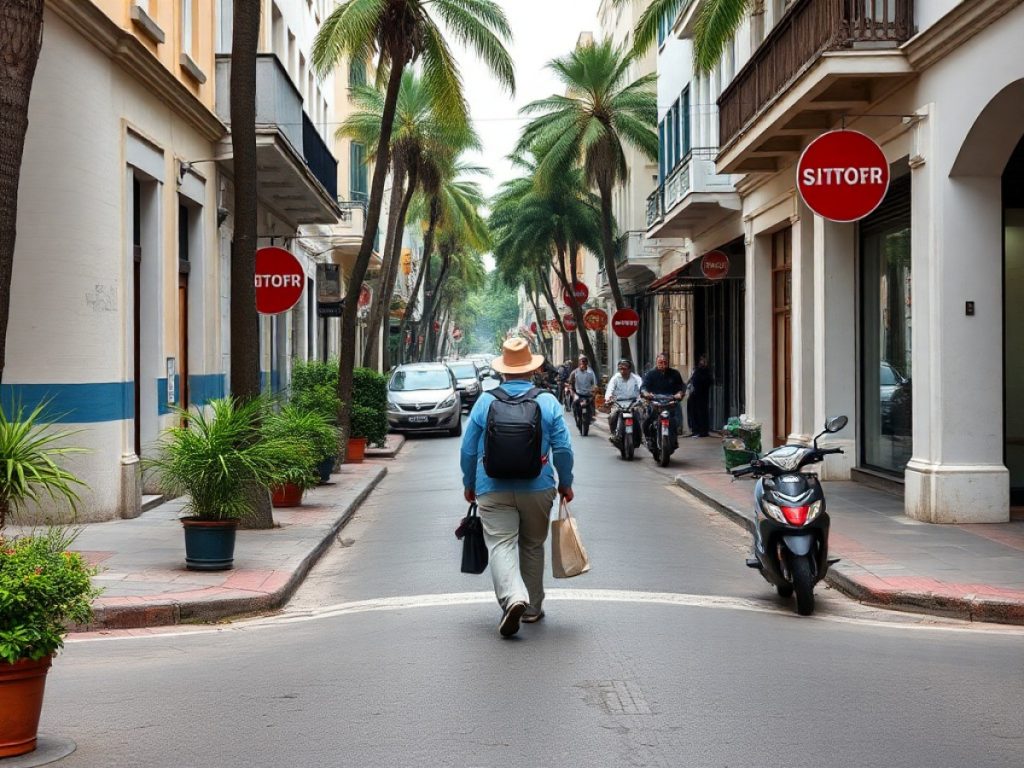
In the tranquil streets of Uruguay, where the echoes of the country’s rich cultural history blend with the everyday hustle, a contrasting concern lurks between the national perception and personal realities of its people. A recent survey conducted by the University of the Republic has unearthed a split in the primary anxieties of Uruguayans; at a national level, security and crime dominate the discourse, yet, shift to the individual plane and the cost of living quickly overshadows all else. This divergence highlights a unique paradox within Uruguayan society, especially at a time when the country reports its lowest inflation rate in decades—a mere 3.11%.
Exploring the National vs. Personal Concerns
National Level Concerns: Security Takes the Lead
In the broader national context, the issue of security remains the frontrunner. The fear of crime and public safety concerns are voiced across various political spectrums, albeit with varying intensity. Supporters of the Republican Coalition are particularly vocal, with 62% citing it as a prime concern, in contrast to 33% from the Broad Front supporters.
Personal Anxieties: The Rising Cost of Living
The scenario pivots when individuals reflect on their personal hurdles. Here, the cost of living emerges as the predominant worry, outpacing other economic concerns like wages. This shift from public safety to economic hardship in personal priorities underscores a critical aspect of everyday Uruguayan life, where even slowing inflation rates fail to alleviate the pressure on household budgets.
Inflation vs. Perceived Living Costs
Despite the low inflation statistics, many citizens continue to feel the pinch in their daily expenses. Economist Gabriela Mordecki sheds light on this apparent contradiction by distinguishing between inflation and actual price levels. She elaborates that a slowing in inflation does not necessarily equate to a decrease in the cost of goods and services, explaining why many still perceive high living costs. This scenario is compounded by the fact that some products remain relatively expensive in Uruguay compared to other regional countries, and perceptions are further influenced by individual household income and spending expectations.
Survey Methodology and Broader Implications
The insights come from a meticulously conducted survey involving 4,868 volunteers, carried out from February 27 to March 2, 2026. The methodology, as detailed by El Observador and the University of the Republic, forms part of an ongoing public-opinion monitoring project. This project utilizes non-probability surveys processed through alternative inference models to gauge public sentiment more accurately.
Political and Economic Discontent
The findings from the survey reveal a dual-layer of discontent among the Uruguayan populace. On one side, there’s the political and social anxiety concerning public order and safety. On the other, there’s a profound concern over material well-being, primarily driven by the cost of living. This bifurcation of concerns not only dominates public debates but also shapes the private lives of many Uruguayans, pointing to a societal call for addressing both dimensions to foster a more secure and economically stable environment.
These nuanced insights into the fears and daily struggles of Uruguayans offer a deeper understanding of the challenges facing the nation and its people, painting a picture of a society grappling with complex, layered issues that intertwine the public consciousness with private lives.
Similar Posts
- Argentina-US Trade Agreement Impacts Uruguay: What’s Next for the Region?
- Uruguay’s Economy Minister Alarmed: Success Could Be Too Much to Handle
- Uruguay’s Peso Tops Big Mac Index: The World’s Most “Overvalued” Currency!
- UK Inflation Hits 3.8%: Air Fares, Fuel, and Food Prices Skyrocket!
- Argentina’s Inflation Hits 2.5% in November: Economic Impact Deepens!

Gavin Turner is a crypto market analyst with over seven years studying price fluctuations and trading volumes in the United States. He provides detailed reports on sector trends and key indicators to help you anticipate market moves. His rigorous methodology and reliable forecasts guide you in refining your crypto trading strategies.