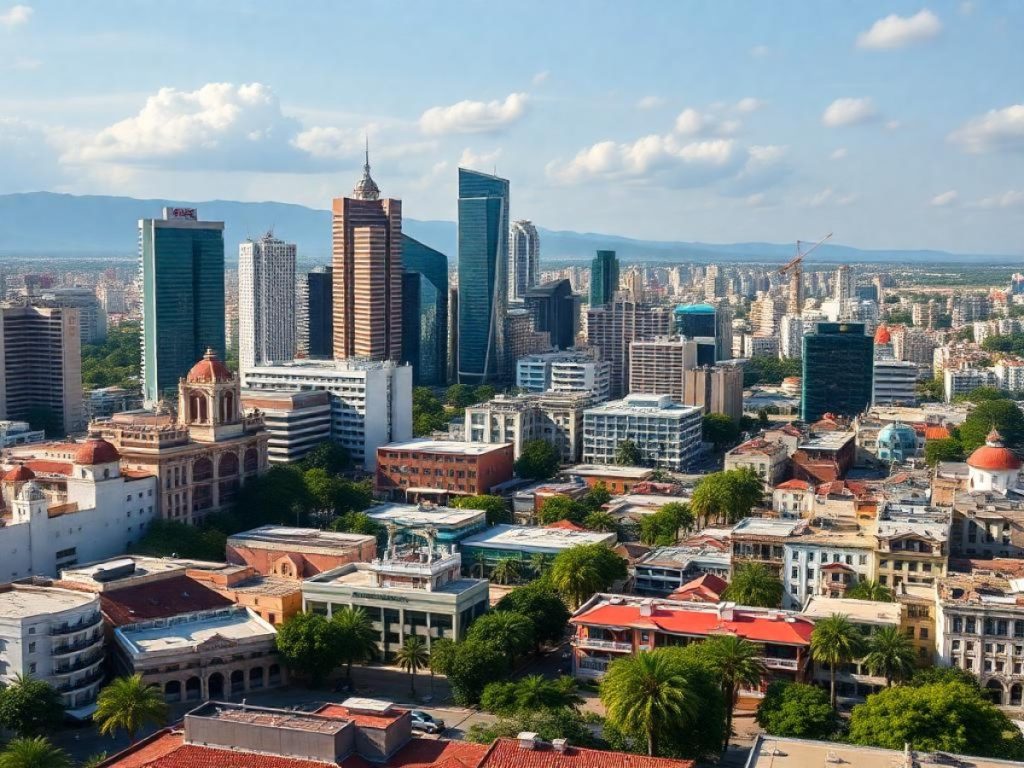
In the bustling heart of South America, Paraguay’s economy has shown remarkable resilience and growth, particularly in the first half of 2025. With a robust year-on-year growth rate of 5.9%, the nation’s economic performance stands out, driven by significant advancements in various sectors. This growth, detailed in the Central Bank of Paraguay’s latest “Quarterly National Accounts” report, highlights a vibrant and diversifying economic landscape in Paraguay. From surging service sectors to booming construction activities, the country is experiencing a period of substantial economic dynamism, albeit with some areas facing challenges.
Leading Sectors Powering Growth
Service Sector Takes the Lead
The service industry emerged as a top performer with an impressive 6.8% growth in the second quarter alone, contributing to a half-year rise of 6.4%. This sector’s success is largely attributed to:
- Commerce
- Financial services
- Transportation
- Household services
These elements combined to push the service sector to new heights, setting the pace for overall economic expansion.
Energy and Utilities Shine Bright
Electricity and water services displayed even more remarkable growth rates. With a striking 14.3% jump in the second quarter and an 11% increase over six months, this sector benefited significantly from the contributions of binational corporations. The robust performance underscores the pivotal role of energy and utilities in Paraguay’s economic framework.
Construction and Infrastructure Development
The construction sector also saw healthy growth, with a 4.5% increase year-on-year and an overall 8.6% growth in the semester. This was spurred by:
- Accelerated private sector projects
- Expanded public works
These factors combined to enhance the construction industry’s contribution to the GDP.
Other Notable Sector Performances
Agriculture, livestock, forestry, fishing, and mining collectively marked a 4.8% growth year-on-year, accumulating to 7.7% over the semester. The manufacturing sector wasn’t far behind, posting a 4.3% year-on-year growth, especially boosted by industries such as:
- Meat processing
- Oil production
- Sugar refining
These industries helped maintain a steady growth trajectory in the manufacturing domain.
Challenges in Agriculture
Despite the overall economic upturn, agriculture faced setbacks, showing a 3.1% decline year-on-year in the second quarter and a slight cumulative decrease of 3.2%. The primary cause was a dip in soybean production, though this was partially offset by increased outputs in corn, rice, and cotton.
Domestic Demand and Consumer Spending
Domestic demand experienced a significant boost, with a notable 12.4% growth in the second quarter, propelled by:
- Rising private consumption
- Strong growth in gross fixed capital formation, which surged by 22.4%
This increase in domestic demand illustrates a growing consumer confidence and investment in Paraguay’s economic future, although it was somewhat tempered by reductions in government spending and net exports.
The Central Bank of Paraguay’s report paints a picture of a nation on the rise, with most sectors contributing positively to the overall economic health. The detailed performance metrics provide a promising outlook for Paraguay’s continued economic development, showcasing a country leveraging its diverse sectors to build a robust economic future.
Similar Posts
- Paraguay’s Economy Surges: Growth Exceeds Expectations This Year
- Brazil’s Economy Expands Slightly: 0.1% Growth in Q3 2025
- Paraguay’s Guaraní Tops Regional Stability: Bloomberg Reveals Strongest Currency
- Uruguay’s Economy Surges 2.1% in Q2 2025: Signs of Robust Growth!
- Uruguay’s Economy Sees 1.8% Growth in 2025: Falls Short of Expectations

Gavin Turner is a crypto market analyst with over seven years studying price fluctuations and trading volumes in the United States. He provides detailed reports on sector trends and key indicators to help you anticipate market moves. His rigorous methodology and reliable forecasts guide you in refining your crypto trading strategies.