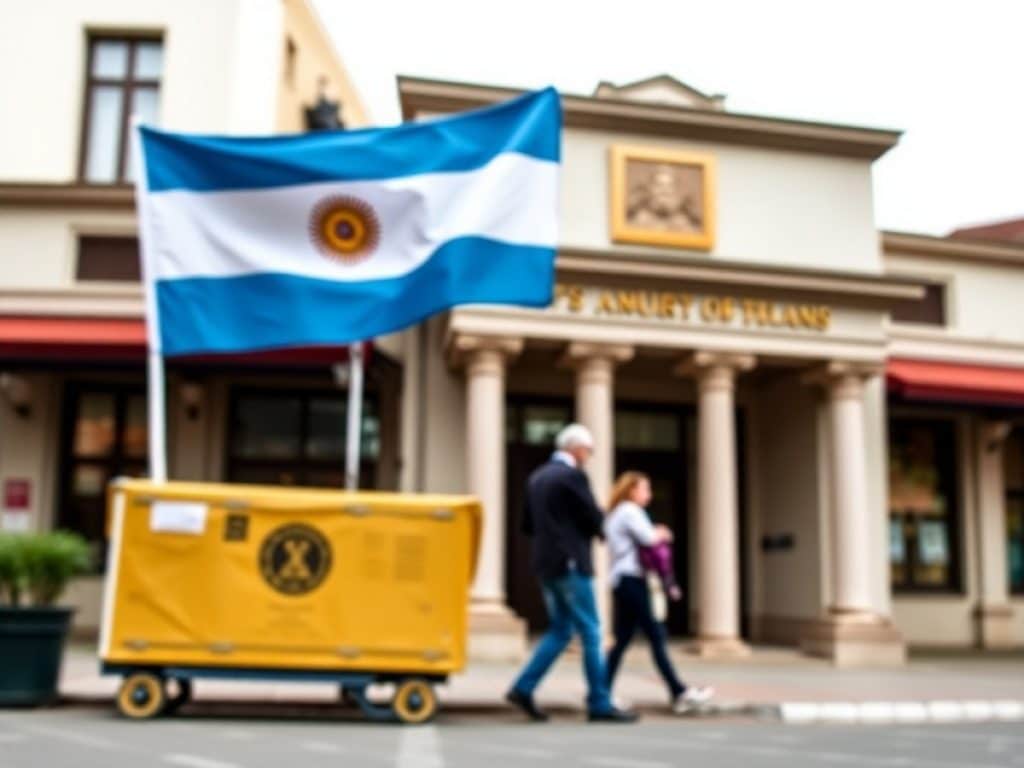
In a significant financial development, Argentina is poised to remove its currency exchange restrictions, signaling a new era of economic freedom and potential growth. This announcement, made by the Vice President of the Central Bank of Argentina (BCRA), Vladimir Werning, came during his speech at the Argentina Fintech Forum. As the country stands on the brink of this pivotal change, it also anticipates the latest inflation figures from the National Institute of Statistics and Census (Indec), with predictions suggesting a continuation of the inflation rate above 2%.
With Argentina navigating through complex economic waters, the removal of these currency controls marks a crucial step toward stabilizing its economy. The decision is rooted in a broader economic strategy to enhance transparency in financial activities and foster a more inclusive market where individuals and businesses can thrive equally. This move could redefine the financial landscape of Argentina, offering a beacon of hope for both local entrepreneurs and international investors.
Imminent Changes in Financial Regulations
Final Barriers to Economic Freedom
The BCRA is set to eliminate the last standing “cross restriction” that has been a significant impediment to free trading within the country’s financial markets. This specific control prevented the simultaneous exchange of currencies in the official and financial markets, a limitation that was temporarily reinforced prior to recent elections. With its removal, Argentina anticipates a smoother financial operation and an increase in market activity.
Historical Context and Future Prospects
Describing the initial phase of lifting currency controls as the “collapse of the economic Berlin Wall,” Werning highlighted the necessity of this move to provide Argentines with the financial freedom they have long been denied. Under previous regimes, discrepancies in currency access between large corporations and regular citizens created a skewed economic environment. Now, with these changes, the Argentine market is expected to be more democratic and equitable.
Strategic Economic Reforms
Enhancing Transparency and Competition
In his discussion, Werning emphasized the importance of moving away from the antiquated financial practices that involved extensive arbitrage and complex currency swaps, known locally as “rulos.” Instead, he urged the private sector to focus on creating real value through long-term productive solutions. By doing so, Argentina hopes to strengthen domestic savings and lessen its dependence on external financial sources.
Promoting Domestic and Foreign Currency Use
A key aspect of the BCRA’s strategy is to promote “currency competition.” This approach not only aims to redefine the financial roles of the peso but also to enhance the transaction capabilities of the dollar within Argentina. Since the current administration took office, there has been a notable increase in loans to the private sector, suggesting a robust response to these policy changes.
Economic Outlook and Predictions
Upcoming Inflation Reports and Government Stance
The anticipation builds as Indec prepares to release the inflation figures for October. Forecasts by private consulting firms and the BCRA’s own Market Expectations Outlook suggest another month of inflation exceeding 2%. These figures are crucial as they provide insights into the effectiveness of current economic policies and what might still need adjustment.
Future Predictions by Economic Ministers
Parallel to these developments, Economy Minister Luis Toto Caputo announced plans to propose a tax amnesty bill aimed at encouraging the repatriation and utilization of undeclared savings, commonly referred to as “mattress dollars.” This initiative, coupled with the ongoing reforms, is part of a broader strategy to stabilize the Argentine economy and reduce inflation to under 1% by mid-2026, according to Caputo’s projections.
As Argentina embarks on this ambitious journey to overhaul its economic systems, the world watches closely. The success of these policies could not only transform the Argentine market but also serve as a model for other nations grappling with similar economic challenges.
Similar Posts
- Argentina and US Seal Major Currency Swap Deal: Economic Implications Explained!
- Argentina’s Central Bank Eases US Dollar Restrictions: New Financial Freedom Expected!
- Argentina Crisis: Dollar Skyrockets Despite Major Interventions by Central Bank, US Treasury
- Argentina Crisis Alert: Interest Rates Skyrocket Following New BCRA Regulations
- Argentina’s Dollar Plunges: New Debt Plan Sparks Market Turmoil

Gavin Turner is a crypto market analyst with over seven years studying price fluctuations and trading volumes in the United States. He provides detailed reports on sector trends and key indicators to help you anticipate market moves. His rigorous methodology and reliable forecasts guide you in refining your crypto trading strategies.