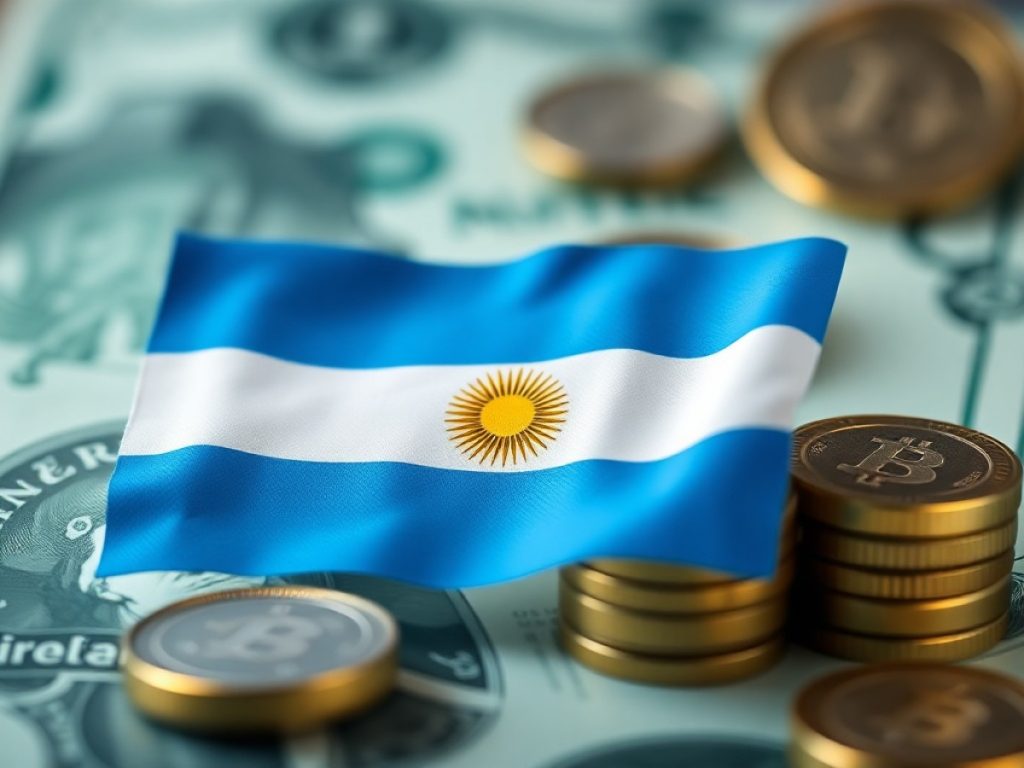
In a recent and intriguing financial turn, Argentina’s currency landscape has undergone noticeable shifts. Following the announcement by Economy Minister Luis ‘Toto’ Caputo concerning the issuance of new dollar-denominated bonds, key segments of the country’s financial market have witnessed a decline in the value of the US dollar against the Argentine peso. This strategic move, aimed at refinancing debt maturities and bolstering foreign currency reserves, seems to have resonated positively with market sentiments, reflecting in various financial metrics observed this past Friday.
The Immediate Market Response
The ripple effect of Caputo’s announcement was seen across several financial indicators. Notably, the wholesale exchange rate, which is stringently managed by the Central Bank of Argentina (BCRA), fell by AR$9, concluding the day at AR$1,435 per US dollar. This rate has not been this low since November 21. Similarly, the retail dollar rate also saw a decrease, ending at an average of $1,462.75 across different financial institutions. In contrast, the informal ‘blue’ dollar rate closed slightly lower at $1,430, after experiencing a temporary rise earlier in the day.
Additionally, the official ‘card’ or tourist dollar, which includes a 30% tax surcharge for overseas transactions, was pegged at $1,898.
Detailed Look at the New Bond Issue
Minister Caputo confirmed the government’s plan to issue a new local-law, dollar-denominated bond, which will have a maturity period until 2029. This bond is designed to offer a 6.5% semi-annual coupon rate. Market analysts are optimistic, suggesting that a successful fundraising of between US$1.2 billion and US$1.5 billion in the upcoming week would signify a robust financial maneuver.
Strategic Impacts and Future Plans
The broader implications of this financial strategy include enhanced availability of foreign currency reserves. The government has also laid out proposals for a potential US$7 billion deal with banking entities, alongside an existing US$20 billion swap arrangement with the US Treasury. These moves are aimed at covering substantial portions of Argentina’s financing requirements for the forthcoming year.
Performance of Bonds and Equities
Following the announcement, Argentina’s sovereign bonds displayed mixed reactions, though bonds governed by foreign law generally saw an approximate 1% increase, contributing to a reduction in the Country Risk index to about 623 basis points.
Local and International Stock Markets
On the equities front, Argentine shares traded in New York (ADRs) mostly experienced positive shifts. For instance, Loma Negra, a notable company, saw its stock rise by 2.3%. Conversely, the Buenos Aires Stock Exchange (Merval) recorded a slight dip in some sectors. Noteworthy declines were observed in shares of companies such as Edenor, Grupo Supervielle, and Telecom, which fell by 2.6%, 2.3%, and 1.5% respectively.
With these strategic financial adjustments and the market’s response, Argentina continues to navigate its complex economic landscape, aiming for stabilization and growth amidst ongoing challenges.
Similar Posts
- Argentina Seeks Local Funding for $4.2 Billion Bond Payment: Deadline Looms on July 9
- Argentina’s Country Risk Plummets to 8-Year Low: Rating Upgrades Boost Dollar Bonds
- Argentina Crisis: Dollar Skyrockets Despite Major Interventions by Central Bank, US Treasury
- Argentine Economy Crisis: Minister Seeks Urgent Aid from Bessent and Georgieva
- Argentine Assets Plunge Amid Global Volatility: Country Risk Nears 600 Points

Gavin Turner is a crypto market analyst with over seven years studying price fluctuations and trading volumes in the United States. He provides detailed reports on sector trends and key indicators to help you anticipate market moves. His rigorous methodology and reliable forecasts guide you in refining your crypto trading strategies.