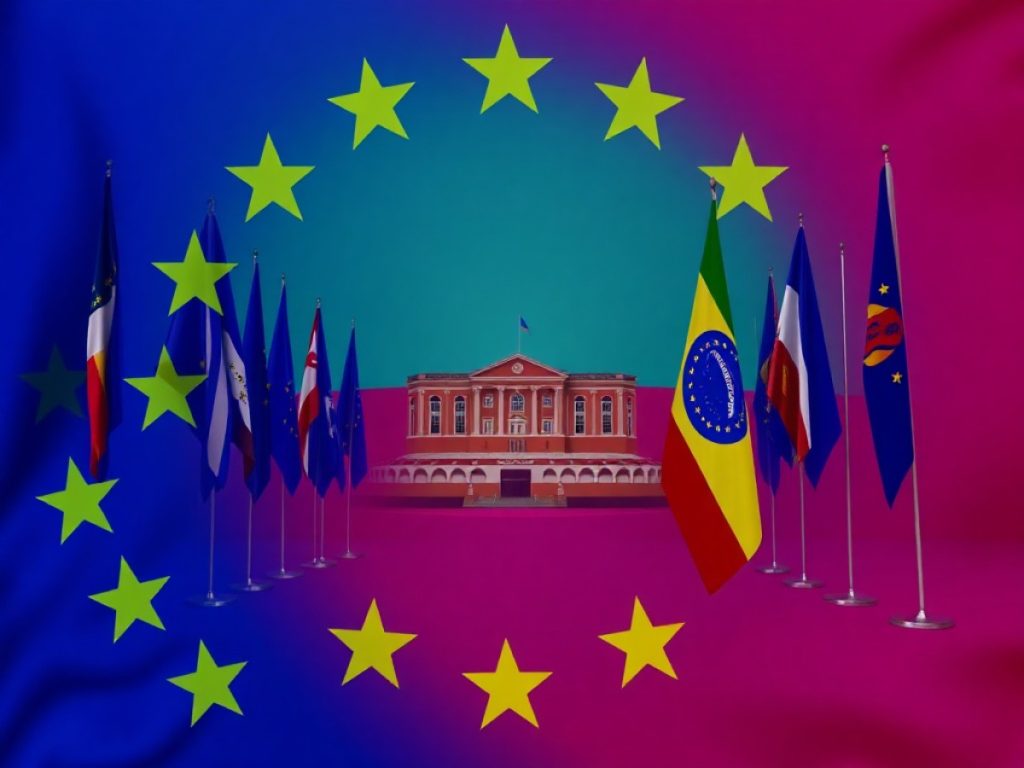
In an unexpected twist that reverberated through the halls of international trade negotiations, the European Parliament has opted to stall the EU-Mercosur trade agreement. This decision comes after years of meticulous talks, culminating in a signing ceremony in Asunción. The Parliament’s move to seek a legal review from the Court of Justice of the European Union (CJEU) casts a shadow of uncertainty over an agreement that was poised to redefine economic relations between the two blocs.
The crux of the Parliament’s concern lies in the legal conformity of the agreement with EU treaties, particularly focusing on a contentious "rebalancing mechanism." This pause not only underscores the complexities inherent in such large-scale international treaties but also highlights the delicate balance of economic interests, environmental considerations, and regulatory alignments that these agreements must navigate. With the agreement now in limbo, stakeholders on both sides are left evaluating the implications of this significant, albeit provisional, halt.
The Legal Inquiry at the Heart of the Holdup
The European Parliament’s decision to freeze the ratification process of the EU-Mercosur trade deal hinges on a specific legal mechanism under Article 218(11) of the EU Treaty. This provision empowers EU institutions to request the CJEU’s assessment regarding the legality of international agreements. The key issue prompting this request is the agreement’s rebalancing mechanism, which could potentially allow for compensatory measures affecting the bloc’s regulatory autonomy. The Parliament’s request to the CJEU seeks to clarify:
– Whether the rebalancing mechanism aligns with EU legal standards.
– The implications of this mechanism for future EU regulatory measures, especially concerning environmental protection and consumer standards.
Implications for EU and Mercosur
The implications of this judicial review are manifold, impacting not just the immediate future of the trade deal but also the broader political and economic relations between the EU and Mercosur countries.
– **For the EU:** This move reflects the complexities of internal consensus within the bloc, where economic initiatives must be balanced against regulatory and environmental policies. The decision also illustrates the procedural hurdles that can delay, if not derail, major international agreements even after political endorsements.
– **For Mercosur:** The members of this South American bloc face renewed uncertainty. The delay affects not only the trade deal’s market access timelines but also influences broader investment and economic planning within these countries.
Political and Economic Contexts
The EU-Mercosur agreement was not just a trade deal but a strategic pivot towards strengthening ties with South America amidst a global landscape marked by increasing geopolitical tensions and trade disputes. The agreement aimed to diversify partnerships and fortify the EU’s position in the global trading system. The current pause places these ambitions under scrutiny, questioning the feasibility of such large-scale bilateral agreements in today’s volatile political climate.
Next Steps and Potential Outcomes
While the CJEU reviews the legality of the contested provisions, the European Commission, led by Executive Vice-President Teresa Ribera, is exploring ways to maintain political momentum. These include:
– Keeping parts of the agreement operational where possible.
– Strategizing to prevent this judicial inquiry from morphing into a prolonged blockade that could stymie the intended economic benefits and strategic alliances envisioned by the agreement.
As this situation unfolds, the global trade community watches closely, aware that the resolution of this issue could set a precedent for how complex international agreements are navigated and ratified in an increasingly interconnected but legally meticulous world.
Similar Posts
- EU-Mercosur Trade Deal Activates Amid Legal Challenges: What’s Next for Global Trade?
- Uruguay, Argentina Seal EU-Mercosur Deal: Fate Now in Brussels’ Hands
- EU Set to Launch Mercosur Deal: von der Leyen Awaits South American Ratifications!
- Uruguay Nears EU-Mercosur Deal Ratification: Special Committee Gives Green Light!
- Brazil Ratifies EU-Mercosur Deal: A Milestone for Legislative Process Completion

Gavin Turner is a crypto market analyst with over seven years studying price fluctuations and trading volumes in the United States. He provides detailed reports on sector trends and key indicators to help you anticipate market moves. His rigorous methodology and reliable forecasts guide you in refining your crypto trading strategies.