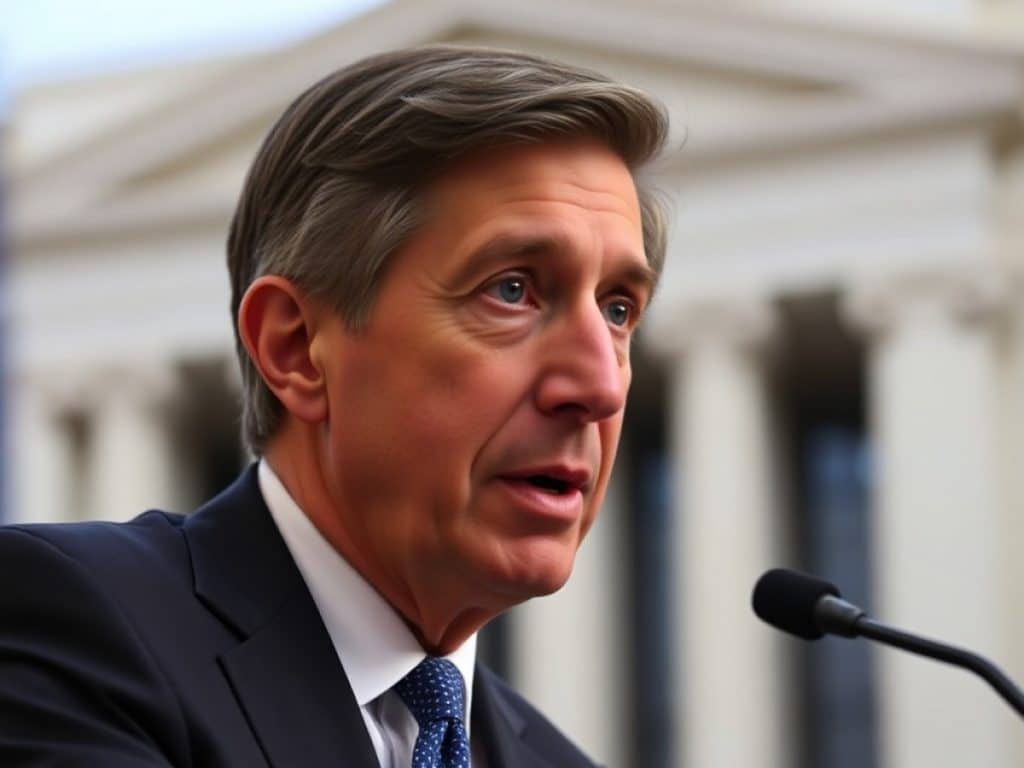
Amidst a backdrop of escalating inflation and global economic challenges, Kevin Warsh steps into the role of the 17th chair of the Federal Reserve. In a significant political move, the U.S. Senate confirmed Warsh by a vote of 54-45, marking one of the most partisan confirmations for a Fed chair in history. This pivotal change comes at a time when the U.S. faces inflation rates at a three-year high, influenced by international conflicts and internal policy decisions. Warsh, known for his critical views on past Federal Reserve policies, particularly those involving quantitative easing, is set to formally assume his new role on May 15, following Jerome Powell’s departure.
Warsh’s confirmation was uniquely contentious, underscored by a nearly party-line vote, with Democratic Senator John Fetterman of Pennsylvania being the sole member of his party supporting the Republican nominee. The process was delayed by opposition from Republican Senator Thom Tillis and a concurrent investigation into Powell by the Justice Department concerning alleged cost overruns during renovations at the Federal Reserve’s headquarters. Although the investigation was eventually shelved, it has left an air of uncertainty about the potential for future inquiries.
Warsh’s Policy Outlook and Economic Challenges
The Inflation Dilemma
As Warsh prepares to take office, he faces an immediate and daunting challenge: soaring inflation. The Consumer Price Index saw a sharp increase in April, spurred by an energy crisis following military actions by the United States and Israel against Iran, and the consequential shutdown of the Strait of Hormuz. Analysts from JPMorgan suggest that the Federal Reserve might maintain the benchmark interest rate steady throughout the year, with potential rate hikes if inflation continues to rise. This economic scenario could potentially create friction with President Donald Trump, who has been vocal about his preference for rate cuts.
Potential Policy Shifts
Warsh has been a long-time critic of the Federal Reserve’s expansive balance sheet, which currently stands at a staggering 6.7 trillion dollars. His tenure could see a shift towards more conservative monetary policies, including possible reductions in the frequency of Federal Open Market Committee meetings and a scaled-back approach to public communications and press conferences. These changes would mark a significant pivot from the strategies employed during and after the financial crises of 2008 and the recent pandemic.
Continued Influence of Jerome Powell
In an unusual move, Jerome Powell will remain a part of the Board of Governors even after vacating the chairmanship. This decision is reminiscent of Marriner Eccles’ tenure in 1948 and signals ongoing influence and continuity at the Fed amidst the transition. Powell’s continued presence could provide stability and insight as Warsh navigates his initial months in office, particularly during his first monetary policy meeting scheduled for June 16 and 17.
Looking Forward
Warsh’s leadership arrives at a critical juncture for the U.S. economy, with significant expectations resting on his shoulders to steer the nation through turbulent economic waters. His strategies and decisions will not only affect domestic economic policies but also resonate across global markets. As Warsh charts a course for the Federal Reserve, all eyes will be on how he balances immediate economic pressures with long-term fiscal stability. His tenure could redefine the role of the Fed and its response to an ever-evolving economic landscape.
Similar Posts
- Trump Appoints Kevin Warsh as Federal Reserve Leader: High-Stakes Confirmation Battle Looms
- Trump Vows to Fire Powell if He Remains After May: Senate Confirmation Delays Explained
- Fed Holds Interest Rates Steady: New Chair Warsh Promises Briefer, Fact-Based FOMC Summaries
- Fed Maintains Interest Rates Again: Three Officials Advocate for Increase
- Xi Pushes for Stronger Renminbi: Trump Plans Shift at Fed’s Helm

Gavin Turner is a crypto market analyst with over seven years studying price fluctuations and trading volumes in the United States. He provides detailed reports on sector trends and key indicators to help you anticipate market moves. His rigorous methodology and reliable forecasts guide you in refining your crypto trading strategies.