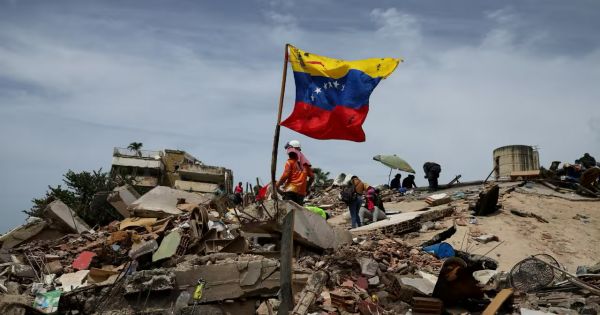
In late June, northern Venezuela was rattled by twin earthquakes, measuring 7.2 and 7.5 on the Richter scale, leaving profound devastation in their wake. The tremors not only claimed thousands of lives but also inflicted severe damage on the region’s infrastructure and homes, with a preliminary financial toll pegged at a staggering $19.6 billion by the World Bank. This figure represents approximately 18% of Venezuela’s GDP, underscoring the scale of the catastrophe in a nation already grappling with deep economic and social challenges.
The quakes exacerbated the hardships of a country where more than three-quarters of the population lives in poverty and which has seen its economy shrink dramatically over the past decade, amid ongoing U.S. sanctions. The dire situation has prompted a closer look at the immediate needs for recovery and reconstruction, with international calls for easing economic sanctions to facilitate Venezuela’s access to its frozen assets abroad.
Breakdown of Earthquake Damages
The World Bank’s assessment provides a detailed account of the destruction:
– Residential Devastation: Nearly half (47%) of the total damages were to residential buildings. In La Guaira, the most affected area, about 20% of homes were completely destroyed.
– Infrastructure and Non-Residential Impact: Infrastructure losses accounted for 27% and non-residential buildings 26% of the damages. The capital district, including Caracas, bore a significant portion of this damage, highlighting the need for robust rebuilding plans.
Comparative Damage Assessments
The World Bank’s figures are aligned with those from other organizations, albeit with some variances:
– United Nations Early Estimate: A week following the earthquakes, the UN estimated the direct damage at $37 billion, nearly double the initial figure from the World Bank.
– Rebuilding Costs: The World Bank also noted that the costs for rebuilding with structural improvements could reach up to $50 billion, factoring in debris removal and reconstruction efforts.
Humanitarian and Economic Challenges
Immediate Humanitarian Needs
Over a million individuals require urgent humanitarian aid, according to the United Nations. The earthquakes left 5,398 dead and 16,740 injured, with thousands still missing and around 18,000 homeless.
Economic Recovery and Investment
The World Bank has expressed concern over the prolonged economic recovery process, which could extend over a decade without significant increases in public and private investment. The institution has urged for an escalation in funding to expedite recovery and mitigate long-term economic impacts.
International Response and Support
In the aftermath of the disaster, fourteen U.S. Democratic lawmakers approached President Donald Trump with a request to lift economic sanctions on Venezuela. This appeal was supported by a hundred economists, emphasizing the need for Venezuela to access its overseas assets to fund recovery efforts.
Collaborative Efforts for Recovery
The World Bank is coordinating with multiple international bodies, including the Inter-American Development Bank and CAF (Development Bank of Latin America), to provide technical and financial support to Venezuela. This collaboration aims to streamline recovery operations and rebuild the affected regions more efficiently.
In summary, the path to recovery for Venezuela in the wake of these devastating earthquakes is fraught with challenges. However, with international cooperation and a focus on strategic investment in infrastructure and community resilience, there is hope for rebuilding and renewal in the face of overwhelming odds.
Similar Posts
- Venezuela Quake Death Toll Hits 3,685: Economists Call for End to US Sanctions
- US Forces Break Venezuela’s Central Bank Secrecy: A Decade of Mysteries Unveiled!
- Investment Banks Skeptical: Venezuela Deal Unlikely to Lower Fuel Prices
- Venezuela Tackles Debt Crisis: Announces Major External Debt Restructuring After Decade in Default
- Colombia Pleads with US: Suspend 12.5% Tariffs Amid Earthquake Crisis

Gavin Turner is a crypto market analyst with over seven years studying price fluctuations and trading volumes in the United States. He provides detailed reports on sector trends and key indicators to help you anticipate market moves. His rigorous methodology and reliable forecasts guide you in refining your crypto trading strategies.