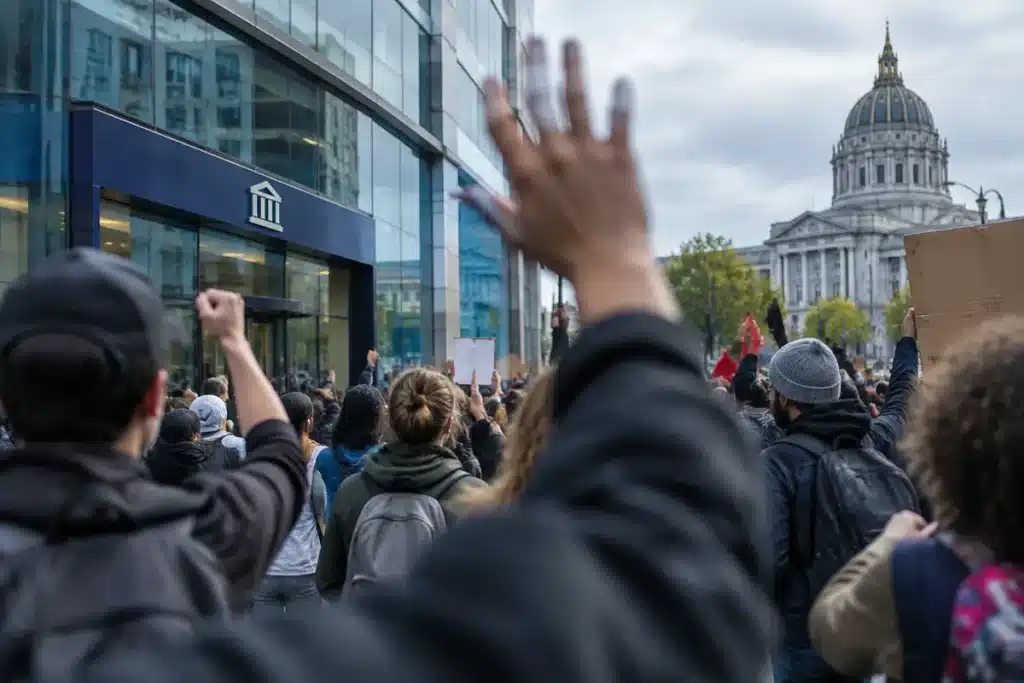
A stunned Paraguay woke up on November 5, 2026, to a political earthquake: President Santiago Peña announced he was handing in his resignation after the devastating collapse of Ueno Bank, yet within minutes deputies moved to impeach him. The rush of events — social unrest, a bank takeover, frozen deposits affecting millions, and a political alliance crumbling — has left the country in legal and institutional uncertainty.
Peña released a short video asking that the stability of the nation and the speedy return of frozen funds be prioritized, while lawmakers scrambled to decide whether accepting his resignation would let him slip into a lifetime Senate seat with immunity. The next steps now lie with the Senate, where a two-thirds vote could remove him from office and strip away any parliamentary protections.
Rapid sequence: what happened, hour by hour
- Tuesday — The Central Bank intervened in Ueno Bank, citing insolvency and dubious loans linked to the Vázquez Group; deposits were frozen and executives detained.
- Wednesday — Public anger spilled into the streets of Asunción; Peña signed an emergency law to accelerate deposit guarantees and nominated Raúl Vera Bogado to run the Central Bank.
- Thursday morning — Peña posted a resignation video and Interior Minister Enrique Riera formally presented the resignation to Congress at about 1:30 p.m.
- Less than an hour later — The Chamber of Deputies, with 78 members present, voted unanimously to forward impeachment charges to the Senate; proceedings against Vice President Pedro Alliana were rejected.

Constitutional minefield: resignation versus impeachment
The legal stakes are straightforward but politically explosive. If Congress accepts Peña’s resignation, under the Constitution he would take a seat in the Senate for life — a position that carries parliamentary immunity. If the Senate convicts him in the impeachment process, that protection would be lost. A two-thirds majority in the Senate is required to remove a president.
Complicating matters, a congressional session called to formally consider the resignation was suspended for lack of a quorum, meaning Peña technically remains president for the moment. That procedural limbo leaves both the executive and legislative branches navigating an unprecedented situation.
How the Ueno Bank collapse set off the crisis
The immediate trigger was the Central Bank’s intervention in Ueno Bank, the country’s largest digital-bank by customer numbers. Regulators cited insolvency and irregular lending to companies tied to the bank’s owners. The takeover froze accounts belonging to nearly three million customers, including sizeable public and pension funds, and prompted mass demonstrations demanding access to savings and political accountability.

- The bank’s top executives were detained as part of the takeover.
- Deposits frozen included hundreds of millions in public and pension money, raising urgent fiscal and social concerns.
- Savers and pensioners led street protests in Asunción calling for immediate restitution and for political leaders to be held responsible.
Links between the president and the bank
Several personal and institutional ties deepened suspicions. Peña had been a shareholder in Ueno Holding until April 2025, and in 2023 he appointed Carlos Carvallo — formerly Ueno Bank’s chief executive — to run the Central Bank. Those connections, combined with the scale of the financial damage, prompted calls for investigations and intensified pressure on Peña’s government.
Political fallout: allies withdraw and prosecutors move in
The ruling party’s abandonment was decisive. Former president and longtime Peña ally Horacio Cartes, leader of the Colorado Party, publicly backed impeachment proceedings, declaring he would not support what he called the misuse of public and private funds. That withdrawal of backing helped clear the way for the unanimous vote in the lower chamber.
Prosecutors opened inquiries and opposition legislators widened a criminal complaint that alleges a range of offenses, including:
- Illicit enrichment
- Money laundering
- Influence peddling
The complaint names not only Peña but also Economy Minister Óscar Lovera, former Central Bank president Carlos Carvallo and other officials. As of this writing, formal criminal charges against the president have not been filed.
Immediate political consequences and possible outcomes
The deputies’ unanimous decision to bring impeachment charges sends the matter to the Senate, where removal requires a two-thirds vote. The lower chamber also rejected impeachment against Vice President Pedro Alliana, who would assume the presidency until the end of the term on August 15, 2028, if Peña is removed or his resignation is accepted and he is no longer serving as president.
- If the Senate accepts impeachment — Peña loses any claim to lifetime senatorial immunity and could face criminal proceedings.
- If Congress accepts the resignation before the Senate convicts — Peña would become a senator for life and gain immunity from prosecution in that capacity.
- If neither body reaches a decision — Institutional paralysis could deepen, prolonging economic uncertainty and protests.
Context and historical echoes
Santiago Peña, a 47-year-old economist who took office in August 2023, would become only the second president since Paraguay’s return to democracy in 1989 to face an impeachment reaching the Senate; the previous high-profile case saw Fernando Lugo removed in 2012 in a rapid process.
Who to watch next
- Santiago Peña — whether he stays in office while Congress deliberates or is removed.
- Senate leaders — their vote will determine whether Peña retains immunity.
- Prosecutors — the scope and speed of any formal charges could shape the legal landscape.
- Public reaction — street protests and the demands of savers and pensioners will continue to influence policy decisions.
Similar Posts
- Paraguay Central Bank under pressure: lenders’ solvency doubts escalate
- Paraguay Banking Superintendent Arrested in Ueno Bank Probe: Corruption Scandal Unfolds
- Frozen Ueno Bank savings: Paraguay demands partial return within 24 hours
- Paraguay Seizes Ueno Bank: Freezes Deposits of 3 Million Customers
- Ueno Bank Closure: Customers Left with Lost Savings and Shattered Trust

Gavin Turner is a crypto market analyst with over seven years studying price fluctuations and trading volumes in the United States. He provides detailed reports on sector trends and key indicators to help you anticipate market moves. His rigorous methodology and reliable forecasts guide you in refining your crypto trading strategies.