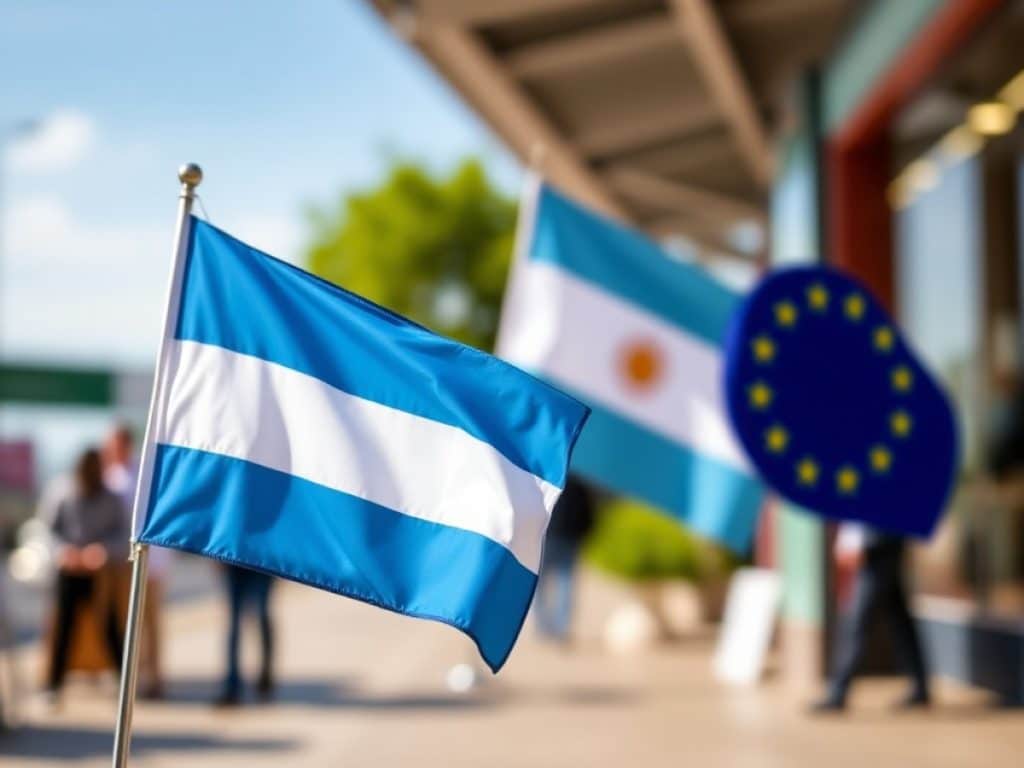
In a significant move that marks a progressive step in international trade relations, Uruguay and Argentina have officially ratified the trade agreement with the European Union. This pivotal agreement, which was initially signed in Asunción on January 17, promises to reshape the economic landscape of Mercosur countries and Europe by gradually phasing out tariffs on 92% of bilateral trade. The decision by Uruguay and Argentina not only underscores their commitment to enhancing regional economic integration but also shifts the spotlight to the European Union, where the agreement’s fate now hangs in the balance due to pending reviews and legal assessments.
Details of Ratification and Implications for Mercosur
Both Uruguay and Argentina have demonstrated a strong parliamentary support for the EU-Mercosur trade deal. In Uruguay, the lower house witnessed an overwhelming ratification with 91 votes in favor and only 2 against. This was quickly followed by approval in the Senate. Similarly, Argentina’s Senate passed the treaty with 69 votes for and just 3 against, indicating a robust favorability after the Chamber of Deputies had earlier given its nod.
With these moves, Uruguay and Argentina become the first founding members of Mercosur to complete the parliamentary approval process. The ball is now in the court of the remaining members, Brazil and Paraguay, who are navigating through their respective legislative procedures to ratify the treaty.
The European Union’s Role and Potential Provisional Application
The European Union is currently undertaking a thorough legal review of the treaty, influenced by a request from the European Parliament for an opinion from the Court of Justice of the EU on the agreement’s compatibility with EU treaties. This step is critical as it could potentially delay the full ratification process.
Despite these legal intricacies, there is momentum within the EU to possibly initiate a provisional application of parts of the deal. This would allow certain aspects of the agreement to be implemented temporarily while the comprehensive regulatory steps are being finalized. The provisional application is especially significant as it could set a precedent for handling complex international trade agreements within the EU framework.
Economic and Political Repercussions in South America
Impact on Uruguay
For Uruguay, the deal is more than just a trade agreement; it’s a strategic enhancement of its economic architecture. According to Uruguay XXI, the EU stood as Uruguay’s third largest export destination in 2025, trailing behind China and Brazil. The Uruguayan government anticipates that the implementation of this agreement could boost GDP by 1.5 percentage points, increase exports by approximately 4%, and have a moderate positive impact on employment and real wages.
Political Dynamics in Argentina
Concurrently with the ratification, Argentina’s political scene was abuzz with other significant developments. The Senate confirmed Fernando Iglesias as the ambassador to Belgium and the EU, amidst some contention over his past public remarks and their alignment with Argentina’s diplomatic stance, particularly concerning sovereignty issues.
Broader Socio-political Challenges
Following the ratification of the trade deal, the Argentine Senate moved to debate amendments to the 2010 glacier protection law. This law, which currently restricts industrial activities in glacier and periglacial areas, faces proposed changes that could potentially recalibrate environmental protections. This has sparked considerable activism, highlighted by the detention of several Greenpeace activists during a protest.
The unfolding events in both Uruguay and Argentina not only pave the way for a transformed economic relationship with Europe but also highlight the nuanced interplay of economic policy, environmental considerations, and diplomatic engagements shaping the future of South America’s geopolitical and economic landscape.
Similar Posts
- Uruguay Nears EU-Mercosur Deal Ratification: Special Committee Gives Green Light!
- Argentina Leads Mercosur: Lower House Approves Pivotal EU Trade Deal
- EU Set to Launch Mercosur Deal: von der Leyen Awaits South American Ratifications!
- Milei Attends, Lula Absent: Mercosur and EU Seal Historic Deal in Asunción!
- EU-Mercosur Trade Deal Stalled by European Parliament: Legal Opinion Sought from Top Court

Gavin Turner is a crypto market analyst with over seven years studying price fluctuations and trading volumes in the United States. He provides detailed reports on sector trends and key indicators to help you anticipate market moves. His rigorous methodology and reliable forecasts guide you in refining your crypto trading strategies.