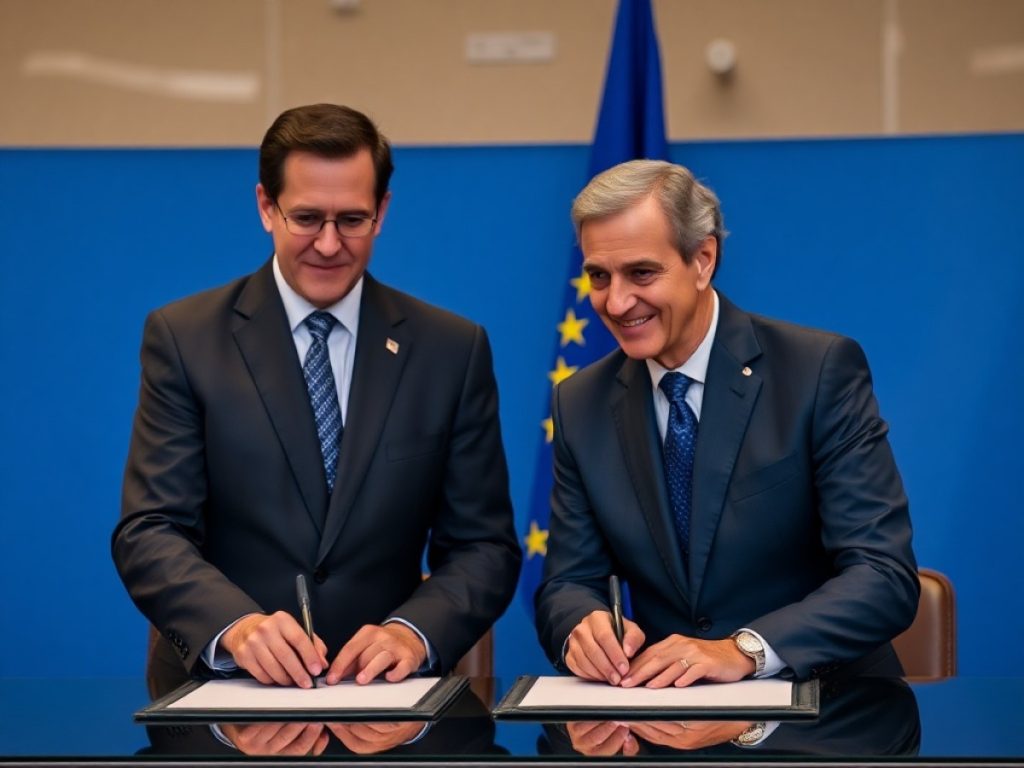
In a significant stride toward economic integration, the European Union and Mercosur, the South American trade bloc, have inked a groundbreaking free trade agreement that promises to reshape the economic landscape of both regions. The signing ceremony, held at the grand Central Bank theater in Asunción, Paraguay, was marked by the presence of key political figures, including Argentina’s President Javier Milei. Notably absent, however, was Brazil’s President Luiz Inácio Lula da Silva, who opted out of the event, delegating representation to his foreign minister. This new pact, hailed as a historic milestone, aims to eliminate tariffs on a vast majority of goods traded between the two blocs, potentially benefiting over 700 million people across two continents.
The Ceremony and Key Remarks
During the ceremony, President Milei did not hold back on his enthusiasm, proclaiming the treaty as “the most important achievement in Mercosur’s history.” He also indicated Argentina’s ambition to pursue further trade agreements beyond this EU partnership. On the European side, EU Commission President Ursula von der Leyen described the agreement as laying the foundation for broader cooperation. Meanwhile, European Council President António Costa emphasized the significant impact on the populations of both regions. Hosting the event, Paraguay’s President Santiago Peña spoke of the need for unity in a world he described as “complex and unstable.”
Details and Impact of the Agreement
The treaty is structured to phase out tariffs on more than 90% of bilateral trade, creating one of the world’s largest free trade areas. Here’s what this means for both blocs:
– **Economic Scale**: The combined markets will cover roughly 720 million people.
– **Trade Volume**: EU-Mercosur trade was valued at about €111 billion in 2024.
– **Export Composition**: EU exports largely include machinery, chemicals, and industrial goods, while Mercosur’s exports are primarily agricultural products and minerals.
Political Undercurrents and Ratification Challenges
Lula’s Notable Absence
Lula’s decision to skip the signing ceremony caught political analysts off guard, although he has publicly supported the treaty’s economic benefits. This move has stirred discussions about Brazil’s diplomatic stance and internal political calculations.
Ratification Hurdles
The agreement’s journey is far from over, as it now requires ratification from the European Parliament and the legislatures of Mercosur member countries, including Argentina, Brazil, Paraguay, and Uruguay. Concerns from European farmers and environmental groups about potential increases in South American imports and environmental impacts, such as deforestation, pose additional hurdles.
Implementation and Global Context
Steps Toward Implementation
The EU has taken proactive steps by authorizing the signature of the comprehensive partnership agreement and an Interim Trade Agreement, which focuses on advancing the commercial aspects while the broader treaty navigates political processes.
Broader International Implications
The signing event occurs against a backdrop of heightened global trade tensions, with the EU looking to strengthen its strategic and economic presence in South America. This agreement is not only a culmination of 26 years of negotiations but also a pivotal moment that could influence global trade dynamics and regional cooperation for years to come.
In sum, this landmark EU-Mercosur agreement represents a significant shift in international trade relations, with potential far-reaching effects on economic and political landscapes across Europe and South America. As it moves through the ratification process, the world will be watching closely to see how these regions navigate the complex interplay of economic ambitions and political realities.
Similar Posts
- EU-Mercosur Landmark Deal: Signing Set for January 17 in Asunción!
- Argentina Leads Mercosur: Lower House Approves Pivotal EU Trade Deal
- Brazil Ratifies EU-Mercosur Deal: A Milestone for Legislative Process Completion
- Mercosur-EU Landmark Deal Sealed: Historic Trade Agreement Signed After 26 Years
- Uruguay, Argentina Seal EU-Mercosur Deal: Fate Now in Brussels’ Hands

Gavin Turner is a crypto market analyst with over seven years studying price fluctuations and trading volumes in the United States. He provides detailed reports on sector trends and key indicators to help you anticipate market moves. His rigorous methodology and reliable forecasts guide you in refining your crypto trading strategies.