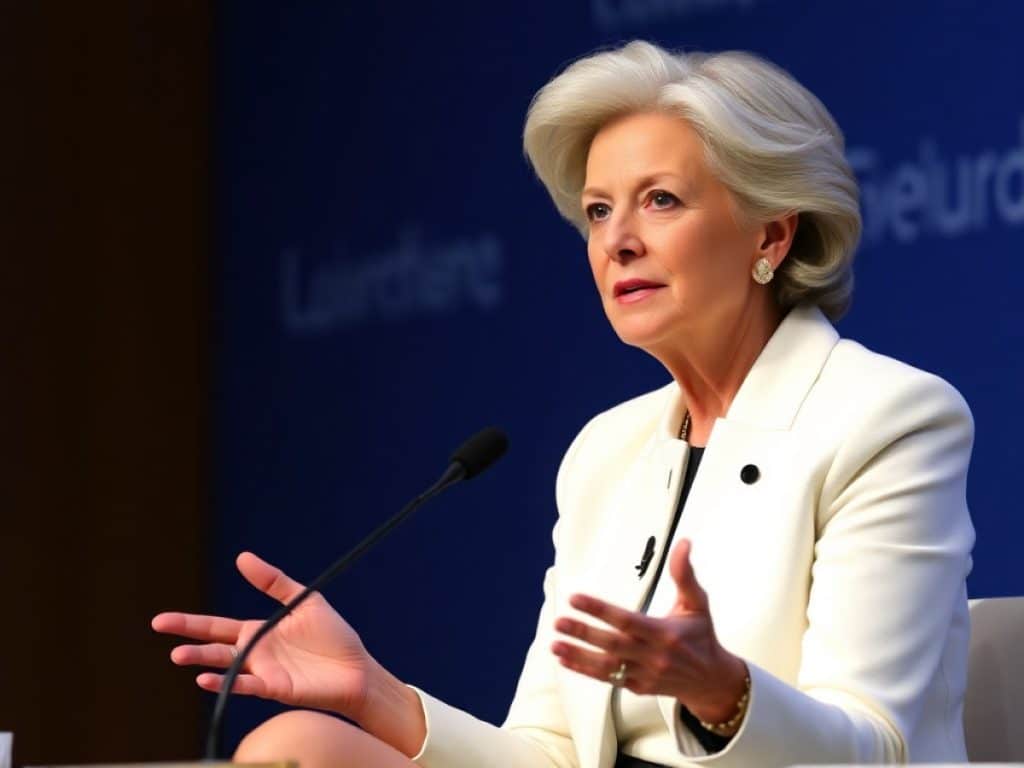
In a striking moment at the Munich Security Conference, European Central Bank President Christine Lagarde detailed how a transformed approach by the U.S. under President Donald Trump has unexpectedly united European leaders. Described by Lagarde as a “kick in the butt,” this pivot in U.S. policy has not only jolted Europe but has also fostered a newfound solidarity among its policymakers. This surge in unity, according to Lagarde, is reminiscent of Europe’s historical consolidation in times of crisis, echoing the foundational efforts of figures like Jean Monnet and Robert Schuman in shaping the European Union.
Strengthening Bonds in Crisis
Lagarde emphasized that Europe historically grows stronger under pressure. The current political climate under Trump’s administration, with its stark challenges and blunt demands, has paradoxically led to a tighter integration among European nations. This phenomenon, as observed by Lagarde, underscores the resilience and adaptability of Europe when faced with external shocks.
Adapting to New Realities: A Two-Speed Europe
The ECB President advocated for a pragmatic approach within the EU, especially when consensus among all 27 member states is elusive. She highlighted the effectiveness of differentiated cooperation, which allows subsets of countries to advance at varying speeds without stalling the collective progress of the Union.
- Example of Unity: Lagarde pointed to the €90 billion loan plan to support Ukraine amidst its conflict with Russia, which was backed by 24 of the EU’s 27 member states, showcasing successful cooperation despite lacking unanimity.
- Political Clarity: Essential for such cooperation is political clarity, where both leaders and the public are aware that moving forward in smaller groups is both possible and beneficial.
Challenges to Cohesive Growth
Despite the advantages of a “two-speed” strategy, this approach does raise questions about the potential segmentation of the EU into various clusters based on different policy areas such as defense, technology, and finance. Estonian Prime Minister Kristen Michal voiced concerns at the conference about the emergence of “onions” or layers of overlapping groupings within the EU, which could complicate the Union’s structure.
Ensuring Flexibility Without Losing Cohesion
In response to these concerns, Lagarde reiterated the importance of maintaining flexibility in EU policies without sacrificing the overarching aim of cohesion. She argued that the strength of Europe lies in its unity, even if member states differ in their capacities and speed of integration. This balance between flexibility and cohesion is crucial for the strategic stability and growth of the European Union.
In her closing remarks, Lagarde stressed that although Europe thrives on diversity and differences, these should not hinder the collective strength and unity of the continent. This message resonates with the ongoing need for European leaders to navigate both internal disparities and external pressures in a way that preserves and enhances the integrity of the Union.
Similar Posts
- Milei Attends, Lula Absent: Mercosur and EU Seal Historic Deal in Asunción!
- EU Eyes Canada for Revolutionary ‘Associate Member’ Status: A Groundbreaking Proposal!
- Canada Proposes UK Join Its EU Economic Alliance: A Bold Move for Global Trade
- Brazil Ratifies EU-Mercosur Deal: A Milestone for Legislative Process Completion
- Lula and Macron Push Forward: New Talks on EU-Mercosur Free Trade Agreement

Gavin Turner is a crypto market analyst with over seven years studying price fluctuations and trading volumes in the United States. He provides detailed reports on sector trends and key indicators to help you anticipate market moves. His rigorous methodology and reliable forecasts guide you in refining your crypto trading strategies.