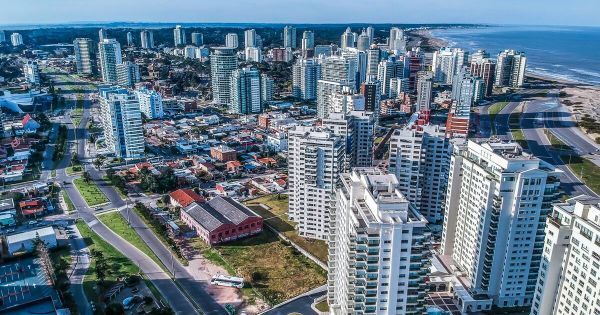
In the ever-evolving landscape of South American real estate, the market dynamics between Argentina and Uruguay have taken a fascinating turn. For several years, Argentine investors have been channeling their capital into Uruguay’s real estate sector, drawn by its stability and potential for high returns. This trend saw a significant uptick post-pandemic, as economic strife gripped Argentina, prompting investors to look abroad. However, recent shifts are painting a new picture. As Argentina shows signs of economic recovery, and the price gap between properties in both countries narrows, the fervor of Argentine investments in Uruguay is beginning to cool.
Current Trends in the Real Estate Investment
The recent trends indicate a slowdown in the influx of Argentine capital into the Uruguayan property market. Initially fueled by economic uncertainties in their home country, Argentine investors are now taking a more measured approach. According to Matías Medina, president of the Uruguayan Real Estate Chamber, while the flow has not stopped, it has certainly decelerated. “With Argentina partially recovering, that wave of Argentines coming to invest here slowed down. They still come; the reason is still the economic and political stability we have,” Medina explains.
Understanding the Market’s Appeal
Despite the slowdown, Uruguay continues to attract foreign investment for several compelling reasons:
- Legal certainty: The Uruguayan rental market is known for its legal certainty which is a significant draw. Guarantees work, and legal deadlines are respected, contrasting sharply with the eviction and property recovery challenges in Argentina.
- Stable investment environment: Uruguay’s political and economic stability remains a major attraction for investors looking for a safe haven.
Price Dynamics and Market Behavior
Luis Silveira, director of a real estate investment firm, noted a convergence in property prices between the two countries. The average price per square meter in Montevideo hovers around 3,500 dollars, with premium areas like Carrasco or Puerto del Buceo seeing values around 4,500 dollars per square meter. This is in comparison to around 2,800 dollars in Argentina, though these figures can vary depending on the source and area.
Impact on Different Investor Segments
While the general trend shows a slowdown, the impact varies across different types of investors:
- Small savers: This group, typically purchasing apartments to rent out, has seen the most significant decrease in activity.
- Larger investors: Those engaged in more substantial developments or commercial real estate continue their activities unabated, showing the nuanced nature of the slowdown.
Hotspots for Investment
Despite the broader slowdown, certain areas and types of properties remain in high demand among investors, particularly from Argentina. One-bedroom units, often priced up to 160,000 dollars, and two-bedroom apartments with a garage, going for around 180,000 dollars, are especially popular. High-demand areas for rental investments include Parque Rodó, Tres Cruces, and La Blanqueada, with Argentina accounting for around 10% of property searches in Uruguay.
Promoted Housing Scheme
Another aspect maintaining momentum is the promoted-housing scheme, a significant driver of new construction in Uruguay. Here, the price per built square meter stands at around 2,385 dollars, as per the National Housing Agency, with a growing share of Uruguayan buyers.
The evolving real estate relationship between Argentina and Uruguay reflects broader economic shifts and investor sentiments in the region. As Argentina recovers and the pricing landscape adjusts, the dynamics of this cross-border investment flow continue to offer intriguing insights into the interplay of regional economies and their property markets.
Similar Posts
- Uruguay Aims for Global Integration: A Strategy to Attract Investment in Uncertain Times
- Argentina’s Economy Cools: Impact of US Support and Government Measures
- Uruguay, Argentina Seal EU-Mercosur Deal: Fate Now in Brussels’ Hands
- Uruguay’s Peso Tops Big Mac Index: The World’s Most “Overvalued” Currency!
- Uruguay Signs On: A New Player in the Trans-Pacific Partnership (CPTPP)

Gavin Turner is a crypto market analyst with over seven years studying price fluctuations and trading volumes in the United States. He provides detailed reports on sector trends and key indicators to help you anticipate market moves. His rigorous methodology and reliable forecasts guide you in refining your crypto trading strategies.