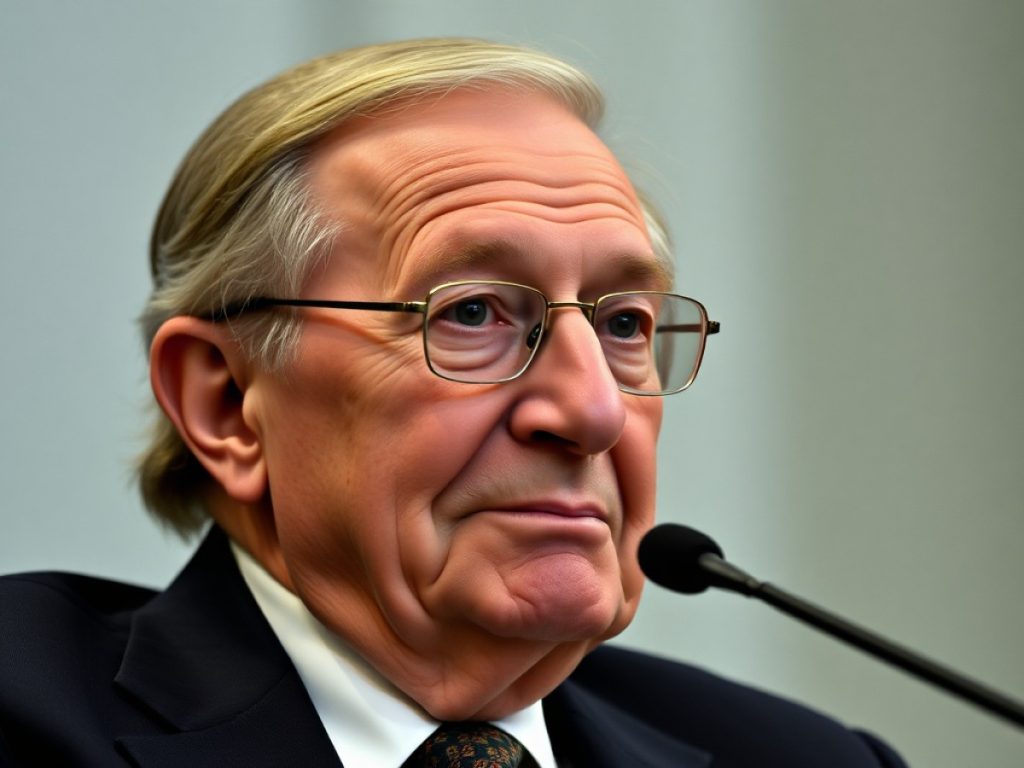
Alan Greenspan, a towering figure in global finance and former chairman of the Federal Reserve, passed away this week at the ripe age of 100. His tenure as Fed chairman spanned nearly two decades, during which he served under four U.S. presidents—Ronald Reagan, George H.W. Bush, Bill Clinton, and George W. Bush. His policies and influence shaped not just American but global economic landscapes through some of the most turbulent financial periods of the 20th and 21st centuries.
Appointed by Reagan in 1987, Greenspan’s career at the Fed was marked by significant economic upheavals, including the dot-com bubble and the early 2000s recession. Known for his cautious yet impactful approach to monetary policy, Greenspan’s strategies were often pivotal during times of economic distress. His death marks the end of an era for American economic policy, one heavily influenced by his complex and often controversial decisions.
The Legacy of a Financial Maestro
Decades of Influence
Greenspan’s influence on the U.S. economy was profound and long-lasting. He was renowned for steering the country through numerous financial crises with a mix of rigorous analytical acumen and innovative policy measures. His leadership saw the U.S. through the Black Monday stock market crash in 1987, the 1997 Asian financial crisis, and the repercussions of the September 11 attacks.
– **Black Monday:** Just months into his tenure, Greenspan faced the largest single-day stock market crash in history. His response helped stabilize financial markets.
– **Asian Financial Crisis and LTCM:** During the late 90s, Greenspan navigated through global economic turbulence, ensuring the U.S. economy remained largely secure.
– **Post-9/11:** His policies post-September 11 helped bolster a shaken economy, guiding it back to a path of growth.
Controversial Policies and Their Long-Term Effects
Despite his successes, Greenspan’s era at the Fed is also remembered for policies that some critics argue laid the groundwork for the 2008 financial crisis. His approach to maintaining low interest rates is often cited as a factor that contributed to the housing bubble and subsequent market collapse.
Greenspan’s Economic Philosophy
Advocacy for Market Economies
A staunch supporter of free-market policies, Greenspan was known for his libertarian views, which influenced his approach to financial regulation and economic management. His tenure was marked by a preference for deregulation and a belief in the market’s ability to correct itself.
“Irrational Exuberance” and Its Impact
Perhaps one of his most famous public statements was his 1996 comment on “irrational exuberance,” suggesting that the stock market might be overvalued. This phrase became a hallmark of his concern for unchecked market speculation. It showcased his subtle yet impactful way of signaling shifts in policy or economic outlook without causing panic.
Personal Life and Background
From Jazz Musician to Economic Leader
Before his illustrious career in economics, Greenspan was a professional musician. He played clarinet and saxophone, even performing with the Woody Herman band before transitioning to economic studies. This background in music contributed to his unique perspective and approach to his role as a central banker.
– **Education:** He earned his economics degrees from New York University and later a Ph.D., demonstrating his deep commitment to understanding economic theory and practice.
– **Early Career:** Greenspan’s early roles included serving as the chairman of President Gerald Ford’s Council of Economic Advisers, showcasing his longstanding involvement in shaping U.S. economic policy.
Writings and Memoirs
In his retirement, Greenspan penned “The Age of Turbulence,” a best-selling memoir that offers insights into his personal beliefs and the decisions he made while at the helm of the Fed. Even in his writings, he defended his policies and shared his rich experiences, continuing to influence economic thought and policy discussions worldwide.
Alan Greenspan’s death is not just the passing of a former Federal Reserve Chairman but the end of a chapter in American economic history. His legacy, marked by both commendation and criticism, will continue to be studied and debated by economists, policymakers, and financial experts around the globe.
Similar Posts
- Trump Appoints Kevin Warsh as Federal Reserve Leader: High-Stakes Confirmation Battle Looms
- Fed Holds Interest Rates Steady: New Chair Warsh Promises Briefer, Fact-Based FOMC Summaries
- Gopinath Exits IMF for Harvard Return: Key Shift in Global Finance Leadership!
- Warsh Takes Over Fed Amid Soaring Inflation: What This Means for Your Wallet
- Chile’s Central Bank Slashes Interest Rate to 4.5%: What It Means for You!

Gavin Turner is a crypto market analyst with over seven years studying price fluctuations and trading volumes in the United States. He provides detailed reports on sector trends and key indicators to help you anticipate market moves. His rigorous methodology and reliable forecasts guide you in refining your crypto trading strategies.