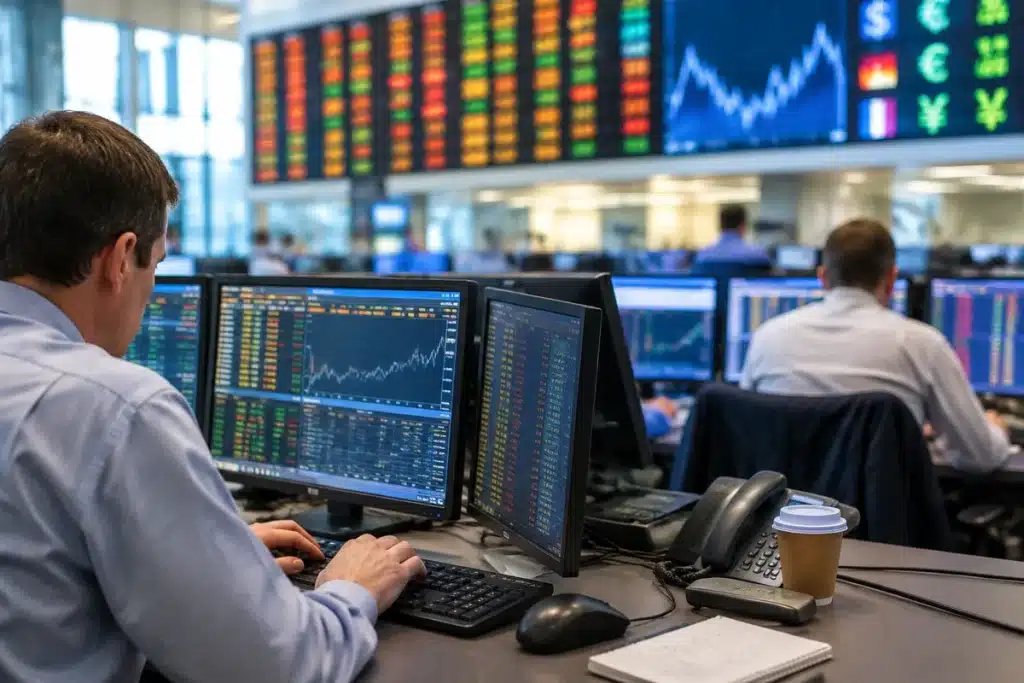
Markets across Brazil erupted into turmoil on Monday as investors digested the surprise of Luiz Inácio Lula da Silva’s runoff victory. Currency dealers rushed to the dollar, stock futures plunged, and trading floors scrambled to contain the fallout — a stark reminder of how political outcomes can instantly reshape market confidence.
What began as a routine trading day quickly turned chaotic: the real tumbled sharply, equity futures hit their safety limits, and regulators moved to widen volatility bands and postpone debt sales. The speed and scale of the reaction underscored how heavily markets had been positioned for a different result.
Currency rout and equity collapse
The real fell by more than 8% against the U.S. dollar in the first session after the election result, a dramatic move that sent the dollar opening near 5.42 reais. Futures tied to Brazil’s benchmark Ibovespa stock index plunged roughly 15% in early trading, triggering automatic safeguards and highlighting the depth of investor surprise.
Emergency steps on the trading floor
Faced with extreme price swings, Brazil’s B3 exchange intervened to calm markets:
– Trading in Ibovespa futures was temporarily halted after the contracts hit the permissible drop limit.
– The exchange expanded the daily fluctuation band to 20% to allow more room for price discovery.
– Brazil’s Treasury cancelled planned debt auctions slated for later in the week.
These moves were intended to prevent disorderly selling but also signaled concern about immediate market stability.
Global reverberations
The shock was not confined to São Paulo. Brazilian assets listed overseas fell sharply, with a Tokyo-traded ETF of Brazilian stocks dropping as much as 15% at one point. Media outlets reported that the currency’s tumble represented the steepest one-day fall since 1999, illustrating how this episode registered as a major event in international markets.
Why investors were caught off guard
Market positioning heading into the runoff had heavily favoured a different outcome. In the weeks following the first round of voting, expectations of a victory by the opposing camp drove credit and equity optimism, with investors anticipating tighter fiscal discipline. A survey by Citibank of 73 fund managers found that about 80% expected the Ibovespa to fall more than 5% if the election went the other way — a sign that sentiment had become one-sided.
Eirini Tsekeridou of Julius Baer summarized the dynamic by noting that many investors had structured portfolios around a specific political scenario, leaving them exposed when reality diverged.
Political uncertainty: what markets will watch next
Several political developments now dominate investor attention:
– Whether the defeated candidate will concede or attempt legal challenges — a refusal to accept results could prolong market anxiety.
– President-elect Lula’s ability to form coalitions in a Congress where opposition forces remain strong.
– The composition and credibility of his economic team, which will shape short- and medium-term policy.
Analysts say the central concern is fiscal credibility. With public debt above 80% of GDP, markets will be focused on whether the incoming administration can produce a fiscal plan capable of generating primary surpluses and stabilising the debt trajectory.
Debt markets and borrowing costs
Brazil’s 10-year government bond yields rose as investors reprice risk, sitting near 6.5% in the immediate aftermath — high by regional standards but still well below countries facing more acute crises. For comparison, Argentine debt has been trading with yields around 12%, underlining differing market perceptions of sovereign risk across the continent.
Investor priorities moving forward
In the coming days and weeks, market participants will be looking for signals that could restore confidence:
– Clear appointments to key economic portfolios and a credible fiscal roadmap
– Steps to reassure international creditors and rating agencies
– Any signs of political calm or escalation from opposing factions
Those priorities will determine whether this sharp market reaction is a short-lived spike of volatility or the beginning of a longer re-pricing of Brazilian assets.
Similar Posts
- Bolsonaro First-Round Win Boosts São Paulo Stocks 8%: Real Strengthens
- Dollar Plummets, São Paulo Stocks Soar: Trump Signals Truce with Iran
- São Paulo Stock Exchange Soars: Positive US-Iran Negotiation Signals Fuel Recovery!
- Debt, Inflation, Hostile Congress: Lula Faces Epic Economic Test in Fourth Term
- De Moraes’ Credit Card Canceled: Brazilian Banks Face New Dilemma

Gavin Turner is a crypto market analyst with over seven years studying price fluctuations and trading volumes in the United States. He provides detailed reports on sector trends and key indicators to help you anticipate market moves. His rigorous methodology and reliable forecasts guide you in refining your crypto trading strategies.