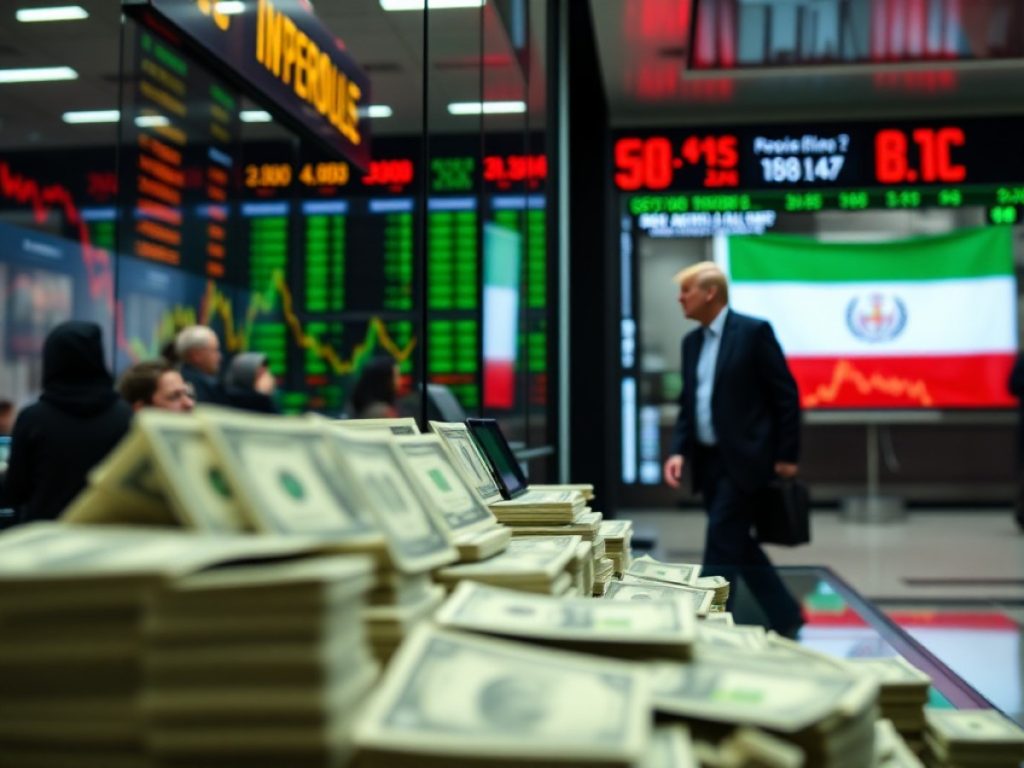
In the ever-volatile world of global finance, a single tweet can cause waves large enough to reshape coastlines. This was precisely the case recently when President Donald Trump signaled a potential de-escalation in tensions with Iran, impacting markets from Wall Street to São Paulo. The ripple effect of his announcement was immediate and significant, underscoring the interconnected nature of modern economies and political decisions. Let’s delve deeper into how this geopolitical pivot influenced various financial indicators and what it means for the global economic landscape.
Market Movements in Brazil and Beyond
Following President Trump’s announcement of delayed strikes on Iran and ensuing diplomatic dialogues, Brazilian markets experienced a buoyant session. The B3 stock exchange, home to the Ibovespa index, saw a sharp increase:
– **Ibovespa Index Performance**: Climbed 3.24%, closing at 181,931 points. This surge not only recouped losses from the previous Friday but also nudged the index near the 183,000 points mark at its peak during the trading day.
Further, the Brazilian real strengthened against the dollar, which itself slid in value against a basket of currencies:
– **Currency Fluctuations**:
– The real appreciated, with the dollar falling to 5.24 reais, marking a decrease of 1.29%.
– The DXY index, which tracks the dollar against major currencies, fell by 0.56%.
Global Oil Dynamics and Stock Reactions
The potential for eased tensions between the U.S. and Iran brought about significant shifts in the oil market, particularly impacting Brent crude prices:
– **Brent Crude Prices**: Dropped by 10.9%, closing below the $100 mark at $99.94 per barrel.
This substantial decrease in oil prices had a mixed impact on Brazilian stocks:
– **Sector-wise Impact**:
– Banking sectors and domestic economy-linked companies saw notable gains.
– Petrobras shares experienced modest rises, tempered by the declining oil prices.
Wall Street’s Response
The news of diplomatic progress resonated positively on Wall Street as well, with major indices registering gains:
– **Major Indices Performance**:
– S&P 500: Increased by 1.15%.
– Dow Jones Industrial Average: Rose by 1.38%.
– Nasdaq Composite: Also up by 1.38%.
Continued Volatility and Economic Projections
Despite the initial optimism, the situation remains fluid, with Iran denying any formal negotiations with the U.S. This contradiction introduces an element of uncertainty that continues to influence market sentiments and forecasts:
– **Economic Forecast Adjustments**:
– Brazil’s Central Bank’s Focus survey adjusted inflation and the Selic rate projections upward, factoring in potential energy supply disruptions.
Geopolitical Implications and Market Outlook
As global markets navigate through these tumultuous waters, the long-term implications of these geopolitical developments remain a key point of focus for investors and policymakers alike. The ability of markets to sustain the initial positive reactions will depend heavily on the actualization of a ceasefire and the stabilization of global oil supplies. As always, the intersection of politics and economics continues to offer a challenging yet fascinating spectacle to observers and participants in the financial world.
Similar Posts
- São Paulo Stock Exchange Soars: Positive US-Iran Negotiation Signals Fuel Recovery!
- US/Iran Conflict Skyrockets Oil Prices: Australia, Norway, Brazil Reap Benefits
- Argentine Assets Plunge Amid Global Volatility: Country Risk Nears 600 Points
- Brazilian Stocks Tumble as US-Iran Deal Crashes Oil Prices: Petrobras Takes Major Hit!
- Haddad on Iran Conflict: Why Brazil’s Economy Won’t Be Hit Immediately

Gavin Turner is a crypto market analyst with over seven years studying price fluctuations and trading volumes in the United States. He provides detailed reports on sector trends and key indicators to help you anticipate market moves. His rigorous methodology and reliable forecasts guide you in refining your crypto trading strategies.