A new government roadmap for the Falkland Islands has landed, ambitious in scope and heavy with long-term bets. It frames a decade-defining moment for the archipelago: significant infrastructure spending, plans to capture future energy income for generations, and a package of social and regulatory reforms meant to steer a tiny administration through complex, large-scale projects.
The document is presented as a pragmatic attempt to balance urgency with realism — to move fast where needed but avoid overcommitting a small public service. What follows unpacks the Plan’s main commitments, the first-year actions that will test its credibility, and the wider political and economic backdrop that makes these choices so consequential.
What the Plan sets out and who signed up
The Islands Plan for 2026–2030 was published by the Falkland Islands Legislative Assembly and formally adopted by Executive Council on October 27, 2026. It carries the endorsement of the eight elected Members of the Legislative Assembly: Stacy Bragger, Lewis Clifton, Dean Dent, Jack Ford, Michael Goss, Dot Gould, Cheryl Roberts and Roger Spink. The stated vision driving the programme is straightforward: build a stable, secure and sustainable future for the Islands.
Rather than a fixed four-year delivery timetable, the Assembly opted for a rolling approach: objectives and resources will be reassessed every 12 months so targets remain realistic and attention is focused where the need is greatest. The Plan emphasises the practical limits of a small government while signalling a readiness to take on some of the largest projects in the Islands’ history.
Cash, projects and a fund for the future
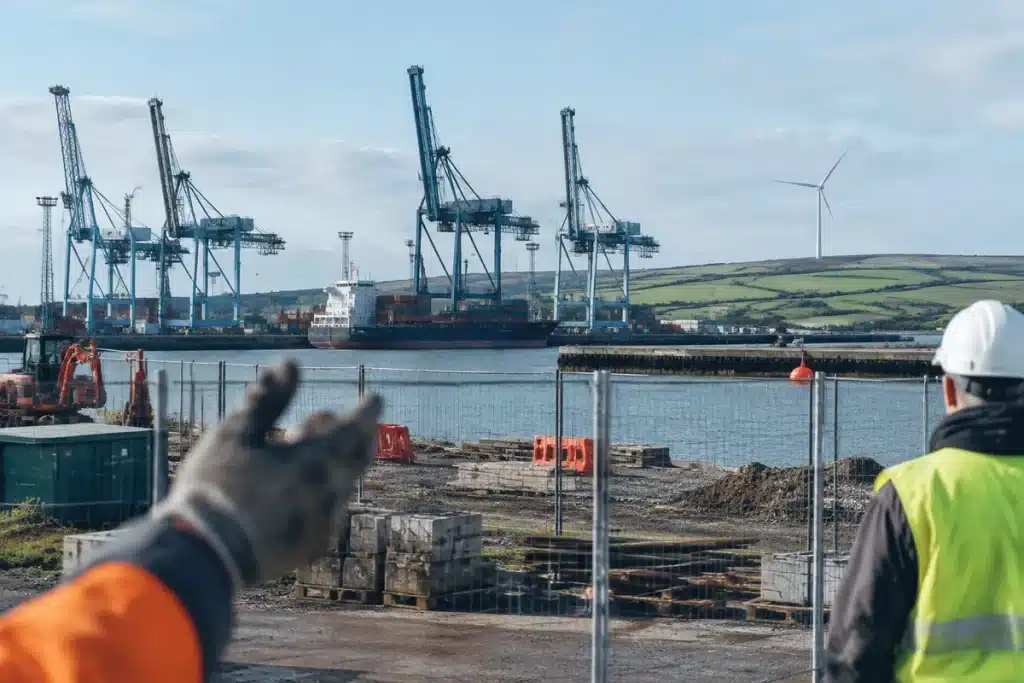
At the heart of the Plan is a major capital programme — in excess of £300 million — covering a set of headline projects that will require sustained management and outside expertise. A core feature is a proposal to create a sovereign wealth fund to capture revenues from future energy projects so those proceeds can benefit future generations.
Major planned investments include:
– a new port development
– energy sector projects (including offshore hydrocarbons and onshore renewables)
– advancement of the wind farm to its next phase
– improved waste management infrastructure
– expanded housing delivery and land release schemes
– upgrades to healthcare and education estates
The authors acknowledge these are ambitious undertakings: they will demand substantial time, skilled personnel and capital, and cannot all be delivered at once by a small administration. That constraint is the rationale for the rolling 12-month prioritisation.

First 12 months: concrete actions to watch
The Assembly has identified six immediate priorities to focus the first year of work. These are being positioned as practical items to create momentum and to deliver visible progress:
- Set up the Sovereign Wealth Fund to receive and manage energy-related revenues for long-term public benefit.
- Accelerate the release of housing plots and build government homes to ease local housing pressures.
- Deliver the next phase of the wind farm programme to increase renewable generation capacity.
- Introduce updated anti-discrimination legislation reflecting modern protections.
- Revise education law, including enhanced support for children with additional needs.
- Review the Permanent Residence Permit (PRP) system to ensure it aligns with labour and population needs.
A tracking document, showing actions, responsible leads and milestones, will be taken to Executive Council. A public version will also be published so residents can monitor progress and hold the Assembly accountable.

Economy, regulation and building resilience
The Plan’s economic strand aims to both stimulate growth and ensure appropriate oversight of expanding industries. Key policy directions include reviewing the National Infrastructure Plan and delivering core projects such as the new port and energy developments, while strengthening regulatory frameworks for any growth sectors.
To enhance national resilience, the Plan proposes:
– intelligence-led risk management and coordinated cross-government planning
– adoption of modern technologies to improve service delivery and risk mitigation
– building international partnerships to broaden capacity and expertise
– creation of a refreshed telecommunications framework to support connectivity
On the business front, the government pledges to help local firms adapt to opportunities from the developing energy sector and other emerging markets. Actions under consideration include exploring additional air connectivity, revisiting the Tourism Development Strategy, and reviewing tax, certain immigration rules and health and social care arrangements. An inward investment strategy and a national branding effort are planned to define acceptable external investment and promote the Islands’ profile for tourism, trade and public diplomacy.
Support for local business and investment
Planned measures to prepare local industry for change include training and capacity-building to meet new sector requirements, clearer rules for foreign investment, and a coordinated approach to marketing the Falklands internationally. The stated aim is to attract investment that aligns with community values and long-term sustainability.
Community priorities, identity and international presence
Social policy forms the third pillar of the Plan. It covers housing, equality, education and health — and introduces mechanisms to monitor how rapid development affects social outcomes. One notable element is the proposal to articulate a set of “Falkland Islands Values” intended to express both British traditions and the community’s distinct identity.
Public diplomacy and support for national sports teams are highlighted as tools to amplify the Islands’ voice globally and to assert the population’s right to self-determination. The Plan commits to active promotion of that right through international engagement, cultural messaging and sporting representation.
Capacity questions and how they will be managed
A recurring theme in the Plan is realism about capacity. The Assembly warns that the scale of work exceeds what a government of the Islands’ size can sustain without careful sequencing and external support. To address this:
– priorities will be set annually and adjusted based on resource availability
– the government will seek international and technical partnerships
– modern project management practices and performance tracking will be emphasized
These steps are intended to reduce delivery risk and ensure taxpayer funds are invested where they can be most effective.
The geopolitical context: energy, legal disputes and timing
The Plan is published as development of the Sea Lion oil field, located north of the archipelago, progresses. Revenues from Sea Lion are explicitly identified as a potential source for the proposed sovereign wealth fund. That activity is politically sensitive: Argentina maintains a sovereignty claim over the Islands and has sanctioned companies linked to the Sea Lion development. Argentina also sought intervention from the International Tribunal for the Law of the Sea; a hearing was scheduled in Hamburg for November 10–11, 2026.
Notably, the Plan itself does not reference Argentina or the dispute. Its focus remains domestic: preparing infrastructure, setting economic rules and committing to a transparent governance approach for any incoming energy revenues.
Transparency and public accountability measures
The Assembly has committed to publish information so residents can follow progress. The promised tracking document will identify owners of actions and set out milestones. This transparency framework is aimed at giving the community tools to see where commitments translate into deliverables and where course corrections are required.
Similar Posts
- Falklands’ Massive £216M Budget: Thriving Under Fiscal Strain with ‘Live Within Our Means’ Strategy!
- Falklands Assembly Tackles Budget Bills, Overseas Expenses: Key Decisions Ahead
- Falklands Flourish: S&P Reaffirms A+ Rating, Backs Current Legislative Assembly
- UK Government Endorses Falkland Islands Trade: New Guidelines Support Businesses
- Falklands Boom: New Strategic Projects Manager to Spearhead Development Initiatives

Gavin Turner is a crypto market analyst with over seven years studying price fluctuations and trading volumes in the United States. He provides detailed reports on sector trends and key indicators to help you anticipate market moves. His rigorous methodology and reliable forecasts guide you in refining your crypto trading strategies.