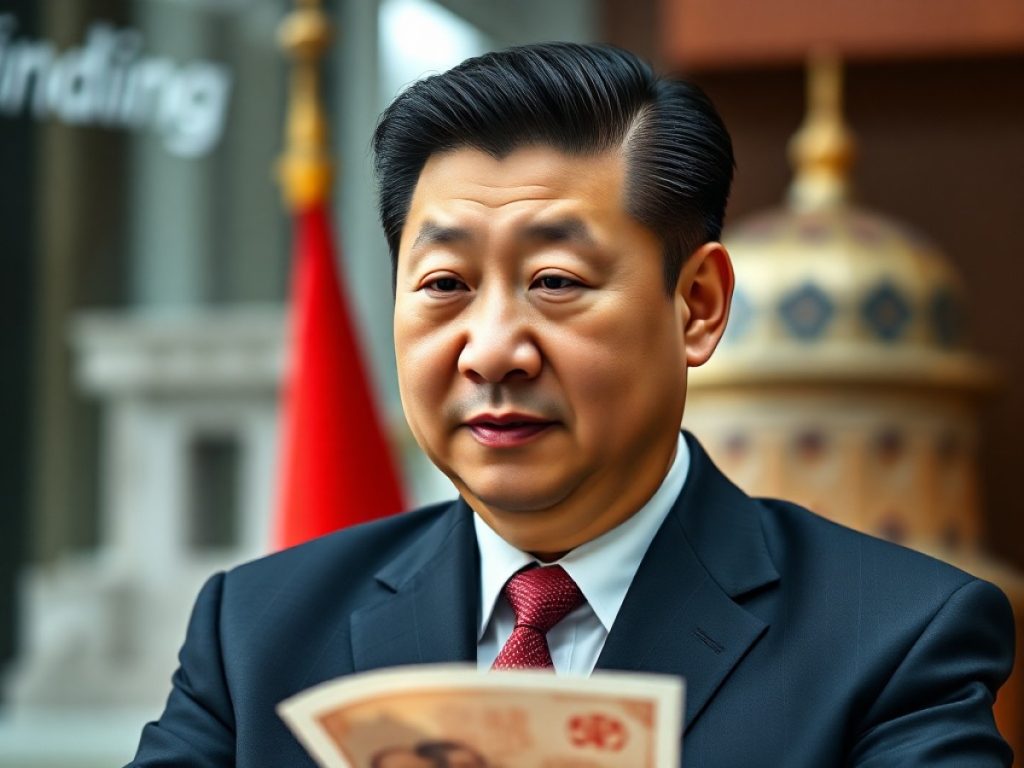
In a strategic move that could reshape global financial dynamics, China’s President Xi Jinping has recently advocated for the renminbi to be elevated to the status of a global reserve currency. This push aims to transform the Chinese currency into what Xi describes as "a powerful currency" that rivals the dominance of the US dollar. This statement was made in Qiushi, a leading journal of the Chinese Communist Party, and captures a bold vision that reflects China’s growing confidence in its economic prowess and its ambition to play a more central role in global finance.
The timing of Xi’s proclamation is particularly poignant, as it coincides with a period of noticeable vulnerability for the US dollar, which has stumbled to a four-year low amidst a backdrop of global monetary instability and shifting central bank policies. This scenario is set against the backdrop of significant changes in the US, where President Donald Trump has just announced his nominee, Kevin Warsh, to lead the Federal Reserve. Warsh, known for his robust credentials and history as an inflation hawk, represents a pivotal change in the leadership at a time when the US monetary policy landscape is already under intense scrutiny.
China’s Currency Ambition
President Xi’s vision for the renminbi extends beyond mere national pride. He outlined several foundational pillars that are necessary to support the currency’s ascendance to reserve status:
– **Strong Central Banking**: A robust central bank capable of sophisticated monetary management to attract and sustain global capital flows.
– **Competitive Financial Institutions**: Development of financial institutions that can compete on a global stage.
– **International Financial Hubs**: Transformation of cities like Shanghai and Shenzhen into international financial centers, influencing global pricing and attracting worldwide capital.
Contextual Significance of Xi’s Announcement
The announcement’s strategic timing is linked to the current weaknesses of the US dollar and ongoing global financial shifts. This period of flux presents a unique window for the renminbi to make significant inroads in international finance, a goal that has been progressively pursued but with modest global reserve holdings so far.
Global Financial Landscape and the Renminbi
Despite ambitious goals, the renminbi currently holds a relatively modest position in the global financial hierarchy. Recent data from the International Monetary Fund indicates that the yuan comprises just under 2% of global reserves. This figure stands in stark contrast to the dominant US dollar and the euro. However, the renminbi has seen accelerated adoption in international trade, particularly following geopolitical shifts such as the Russia-Ukraine conflict, which has propelled the currency to become the world’s second-largest trade finance currency.
Rising Influence in Trade and Beyond
The renminbi’s journey toward becoming a significant player in global finance includes notable milestones and strategic alliances, particularly in regions seeking alternatives to the dollar-centric system. This trajectory is supported by China’s substantial economic footprint and its pivotal role in global supply chains.
The U.S. Perspective and Federal Reserve Changes
On the other side of the Pacific, the US is experiencing its own monetary policy adjustments. Trump’s nominee, Kevin Warsh, is poised to bring a fresh perspective to the Federal Reserve, potentially steering it towards policies that might align more closely with Trump’s economic strategies. Warsh’s previous tenure at the Federal Reserve, coupled with his experiences during the 2008 financial crisis and his academic credentials, make his nomination both noteworthy and controversial.
Warsh’s Economic Philosophy
Known for his inflation-centric focus, Warsh’s approach to monetary policy could signal a shift in how the Federal Reserve responds to current economic challenges, including inflation and job growth. His nomination also reflects broader themes of renegotiation and recalibration within US economic leadership, themes that resonate in the context of global financial realignments.
As these events unfold, the interplay between China’s ambitious plans for the renminbi and the evolving leadership in the US Federal Reserve will undoubtedly have profound implications for the global financial landscape. The strategies adopted by these two economic powerhouses will resonate across international markets, influencing economic policies and trade relationships worldwide.
Similar Posts
- Trump Appoints Kevin Warsh as Federal Reserve Leader: High-Stakes Confirmation Battle Looms
- China Advances Yuan Stablecoin: Now Used in Oil Trading Transactions!
- Trump’s Obsession Unveiled: Why Central Bankers Rally Behind Fed Chair Powell
- Trump Tariffs Shake Dollar: Supreme Court Ruling Adds Economic Pressure
- IMF Boosts Argentina’s Economy: Funds Arrive in Buenos Aires, Elevating Reserves

Gavin Turner is a crypto market analyst with over seven years studying price fluctuations and trading volumes in the United States. He provides detailed reports on sector trends and key indicators to help you anticipate market moves. His rigorous methodology and reliable forecasts guide you in refining your crypto trading strategies.