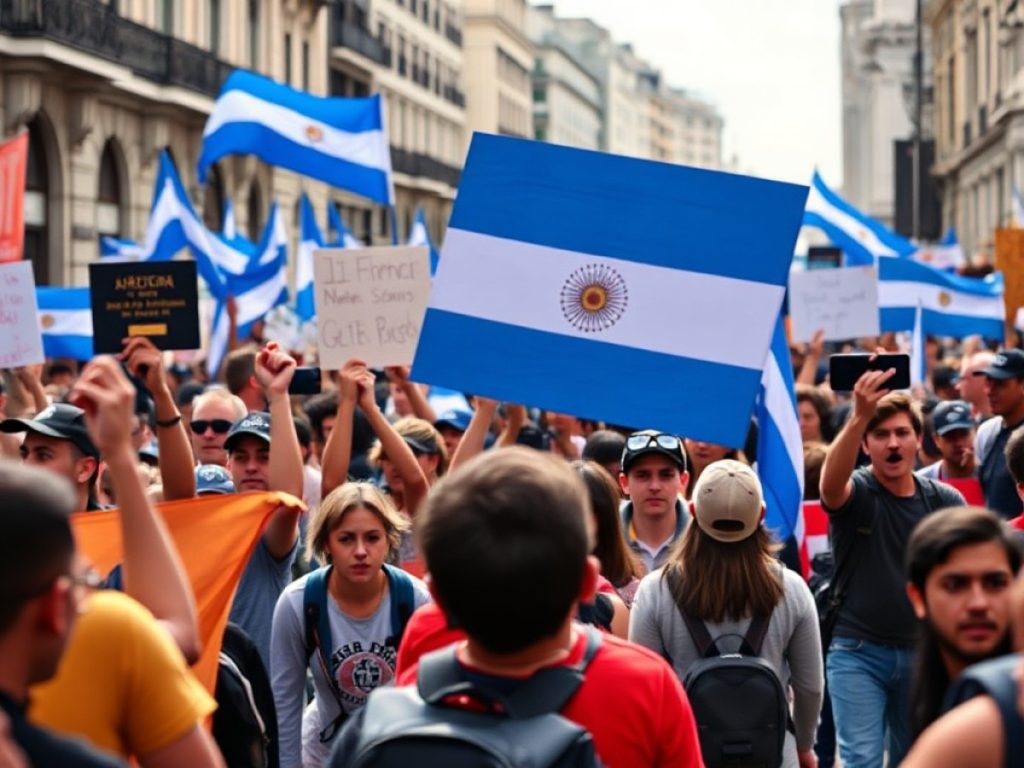
In the vibrant heart of Argentina, a new wave of discontent is sweeping through its universities, manifesting in a significant public demonstration that has caught both national and international attention. This Tuesday, the streets of Argentina echoed with the voices of students, faculty, and various political figures as they participated in the fourth Federal University March. The march, a protest against recent budget cuts by Javier Milei’s government, was not just a local affair but a nationwide movement with major rallies in Buenos Aires’ iconic Plaza de Mayo and simultaneous protests across other major cities.
The stakes are high, as the national government has scheduled post-march dialogues with university leaders, promising a conversation about fund allocations for university hospitals—a critical issue given recent financial constraints. This discussion is pivotal as it follows a series of protests that have gradually escalated in response to what many perceive as a disregard for the educational sector’s financial needs and the future of the nation’s intellect.
The Heart of the Protest
The crux of the unrest lies in the perceived financial neglect by the government, which, according to protestors, jeopardizes the quality of education and the functionality of associated medical institutions. The National Interuniversity Council (CIN), alongside other educational and labor groups, spearheaded this mass mobilization. They are particularly pushing for the implementation of the University Financing Law, a legislation passed in October 2025 but currently stalled due to judicial reviews.
Key Players and Their Roles
Critical figures in this upheaval include:
– Buenos Aires province Governor Axel Kicillof, leading the Movimiento Derecho al Futuro
– La Cámpora, assembling at Avenida de Mayo and Tacuarí
– The Radical Civic Union, left-wing parties, and the Renewal Front, confirming their participation
– The CGT labor federation and the two CTA confederations, joining from 3 p.m.
Government’s Response and Actions
In response to the mounting pressure, the Ministry of Human Capital, led by Sandra Pettovello, defended its stance on needing greater transparency in university spending. Alejandro Álvarez, Undersecretary for University Policies, emphasized at a press briefing that the contested financing law could not be enforced due to its abstract nature and subsequent repeal with the new budget approval.
Furthermore, the government announced the formation of a commission composed of rectors from universities with medical facilities to objectively decide on the distribution of a newly allocated budget. This initiative targets six hospitals managed by the University of Buenos Aires, which have been significantly affected by the budget cuts.
Financial Strains and Sector Impacts
The economic strain on the educational sector is evident through several indicators:
– A 45.6% real-term decrease in transfers to national universities from 2023 to 2026
– A 158% increase in sector salaries against an accumulated inflation of 280%, leading to a 32% loss in purchasing power
– No collective bargaining since October 2024, as reported by teaching unions
Looking Forward
As the fourth major protest under Milei’s administration, this event underscores a growing frustration and a call for change that resonates across the provinces. The federal format of the protest ensures that the discontent and the call for reform are not just centralized but echoed throughout the nation. With the government’s commitment to post-march dialogues, there is a cautious optimism about potential resolutions and the future of university funding in Argentina.
The unfolding events in Argentina are a poignant reminder of the critical role that education plays in societal development and the complexities involved in managing national education systems amidst economic challenges. As Argentina grapples with these issues, the world watches, waiting to see how this vibrant country will navigate through its educational turmoil and emerge stronger.
Similar Posts
- Milei Slashes $1.79 Billion from Budget: Education Takes Major Hit!
- Argentina Crisis: Court Orders Salary Restoration as University Strikes Escalate
- Argentina’s Opposition Challenges Milei: Boosts Funding for Public Universities
- Milei’s Budget Broadcast: “The Worst is Over” – Key Points Revealed!
- Argentine Stocks Plummet in New York: Country Risk Soars Past 500 Points!

Gavin Turner is a crypto market analyst with over seven years studying price fluctuations and trading volumes in the United States. He provides detailed reports on sector trends and key indicators to help you anticipate market moves. His rigorous methodology and reliable forecasts guide you in refining your crypto trading strategies.