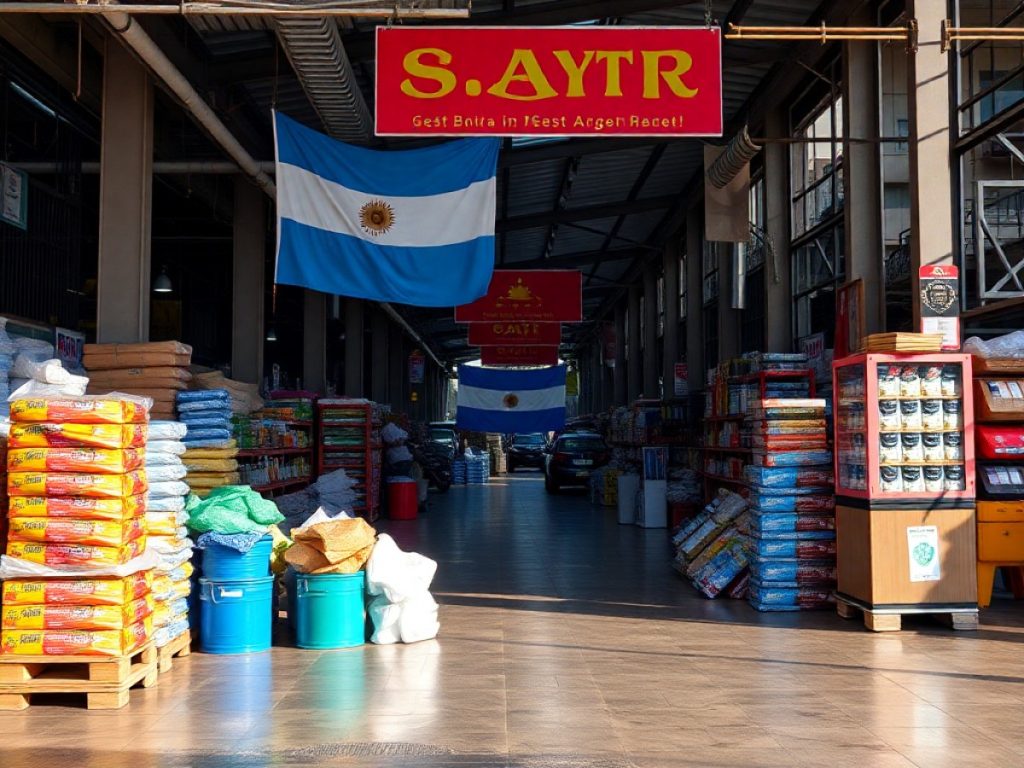
In the bustling heart of South America, Argentina’s economy faces a challenging period marked by a prolonged economic stagnation. Recent data from the Argentina’s Industrial Union (UIA) paints a picture of an industrial sector grappling with declines in crucial areas such as production, sales, and employment. This downturn is not just a fleeting blip; it reflects a deeper, more persistent malaise that has seen the industrial performance index remain below the critical expansion threshold for over a year.
Despite a somewhat stabilized post-election financial atmosphere, the industrial sector’s woes continue, with the UIA’s Industrial Performance Monitor (MDI) indicating a contraction across all sectors for the 14th consecutive survey. Such continuous decline points to systemic issues, including weak demand and rising operational costs, which have pushed even the most resilient industries to their limits. This situation raises important questions about the future trajectory of Argentina’s economy and the potential global implications of its industrial slowdown.
Decoding the Industrial Downturn
The UIA’s latest findings reveal a troubling trend across several key industrial metrics:
– **Production**: A significant 40.3% of companies reported a reduction in production levels.
– **Sales**: Domestic sales dipped for 47.4% of firms, underlining the issue of weak demand.
– **Employment**: About 21% of businesses have had to cut back on their workforce, with additional reductions in work shifts and temporary suspensions affecting nearly a quarter of companies.
– **Financial Health**: Nearly half of the companies struggled to meet crucial payments, with 8.2% falling behind on all their financial obligations.
The Silver Lining and Its Caveats
Despite these challenges, there’s a glimmer of hope as over 60% of companies project an improvement within the next year. However, the UIA cautions against overly optimistic forecasts, noting that previous expectations have often not materialized. The current capacity utilization stands at 57.9%, with most firms not expecting to reach their optimal operational levels until 2026 or later.
Exploring the Impact on Different Sectors
The impact of the industrial slowdown varies significantly across different sectors:
– **Textiles and Metals**: These industries have been hit hardest, experiencing the sharpest declines in production and sales.
– **Supply Chain Adjustments**: There has been a noticeable shortening in supply times and an increase in raw material stocks, suggesting some normalization after the supply chain disruptions of late 2023.
Strategic Challenges and Industry Responses
Companies are not sitting idle in response to these challenges. The primary strategies being adopted include:
– **Cost Management**: Focusing on controlling rising costs, particularly labor costs, which have surged due to shrinking demand.
– **Market Adaptation**: Adjusting to the drop in internal demand, which 40% of the sector cites as a major challenge.
This detailed analysis of Argentina’s industrial sector not only highlights the current economic struggles but also frames the critical decisions that businesses and policymakers must make in the coming months. As Argentina navigates this turbulent period, the global community watches closely, understanding that the ripple effects could extend far beyond its borders, influencing economic dynamics in broader South American and global markets.
Similar Posts
- Argentina’s Industrial Sector Plunges 5% in July: Steepest Drop of the Year Revealed!
- Argentine SMEs Struggle Under Milei’s Policies: Economic Impact Revealed
- Paraguay’s Economy Surges 5.9% in First Half of 2025: Record Growth Highlights
- Argentina’s Trade Surplus Skyrockets 149%: Stronger Exports Drive June’s Economic Boom
- Brazil’s Employment Crisis Deepens: Job Creation Hits Yearly Low

Gavin Turner is a crypto market analyst with over seven years studying price fluctuations and trading volumes in the United States. He provides detailed reports on sector trends and key indicators to help you anticipate market moves. His rigorous methodology and reliable forecasts guide you in refining your crypto trading strategies.