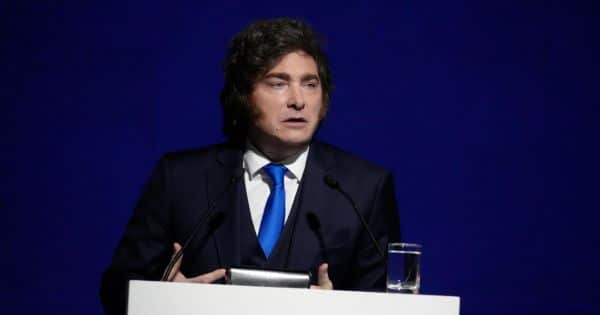
In a riveting address to business leaders and policymakers at the American Chamber of Commerce summit held in Buenos Aires, Argentine President Javier Milei took the stage to confront the nation’s escalating inflation rate, which had just hit a new high. The statistics agency INDEC had earlier reported a monthly inflation rate of 3.4% for March 2026, marking a year-long trend of increasing prices and the highest spike in the last twelve months. With characteristic candor and a touch of disgust, President Milei expressed his frustration with the figure, diverging from typical political maneuvers to address the issue head-on. He attributed the inflation surge to a combination of domestic political strife and international crises, specifically pointing fingers at the legislative opposition and the ongoing war in the Middle East.
Unpacking the Causes of Argentina’s Inflation Surge
Opposition’s Role and Legislative Impact
President Milei accused Argentina’s legislative opposition of precipitating a “massive collapse in money demand,” which he quantified as a staggering $41 billion loss in the latter half of 2025. He described this as a speculative attack, an alleged attempt by opposition politicians to destabilize the fiscal balance through the passage of over 40 laws. Despite these efforts, Milei asserted that they failed to break the government’s fiscal discipline.
Global Tensions and Price Pressures
On the global front, the ongoing conflict in the Middle East was highlighted as a significant factor driving up costs for fuel and transportation—a direct hit to the economy that also rippled into other sectors. Seasonal adjustments in education and a spike in meat prices further compounded the inflationary pressures. According to INDEC, regulated prices, which include public services, transportation, and education, saw substantial increases. The education sector alone jumped 12.1% at the onset of the school year, with transportation following closely with a 4.1% increase, including notable hikes in fuel prices and airfares.
Statistical Overview and Market Reactions
Despite the troubling inflation report, the figures surpassed even the grim forecasts by market analysts. The Central Bank’s Market Expectations Survey (REM) had anticipated a 3.0% increase, while top financial analysts expected a slightly higher rate of 3.1%. With the March figures in, the cumulative inflation for the first quarter stood at 9.4%, alarmingly close to the annual projection made by Economy Minister Luis Caputo.
Government’s Stance and Future Projections
In response to the escalating inflation, Milei urged patience among citizens and decisively rejected any suggestions to ease monetary policies, warning against making hasty decisions in times of economic distress. He emphasized adherence to economic theory and maintaining core values, projecting confidence that the inflation rate would eventually decline once the current challenges were surmounted.
Economy Minister Caputo also echoed this sentiment in his remarks at the summit and on social media platforms, noting the significant impact of the Middle East conflict on the month’s inflation figures but expressing optimism about a forthcoming downward trend as the effects of the money demand collapse diminish.
Comparative Regional Context
Despite these assurances, Argentina remains in a precarious position regionally, with one of the highest inflation rates, second only to Venezuela. This ongoing economic challenge underscores the complex interplay of domestic policies and global events in shaping the economic landscape of a nation.
As Argentina grapples with these multifaceted issues, the path forward requires a balanced approach that addresses both the immediate economic pressures and the underlying structural challenges. With the world’s eyes on Milei and his administration, the coming months will be crucial in determining whether their strategies will steer the country towards economic stability or further uncertainty.
Similar Posts
- Bank of England Holds Rate at 3.75%: Inflation Steady at 2.8%, Despite Volatile Energy Prices
- Brazil’s Inflation Hits 4.39% in April: Spike Driven by Rising Food and Drug Prices
- Argentina Braces for Record Inflation: Caputo Predicts “Best 18 Months Ahead”
- Argentina’s Opposition Challenges Milei: Boosts Funding for Public Universities
- Brazil’s Central Bank Slashes Selic Rate to 14.75%: Begins Easing Cycle Amid Economic Shifts

Gavin Turner is a crypto market analyst with over seven years studying price fluctuations and trading volumes in the United States. He provides detailed reports on sector trends and key indicators to help you anticipate market moves. His rigorous methodology and reliable forecasts guide you in refining your crypto trading strategies.