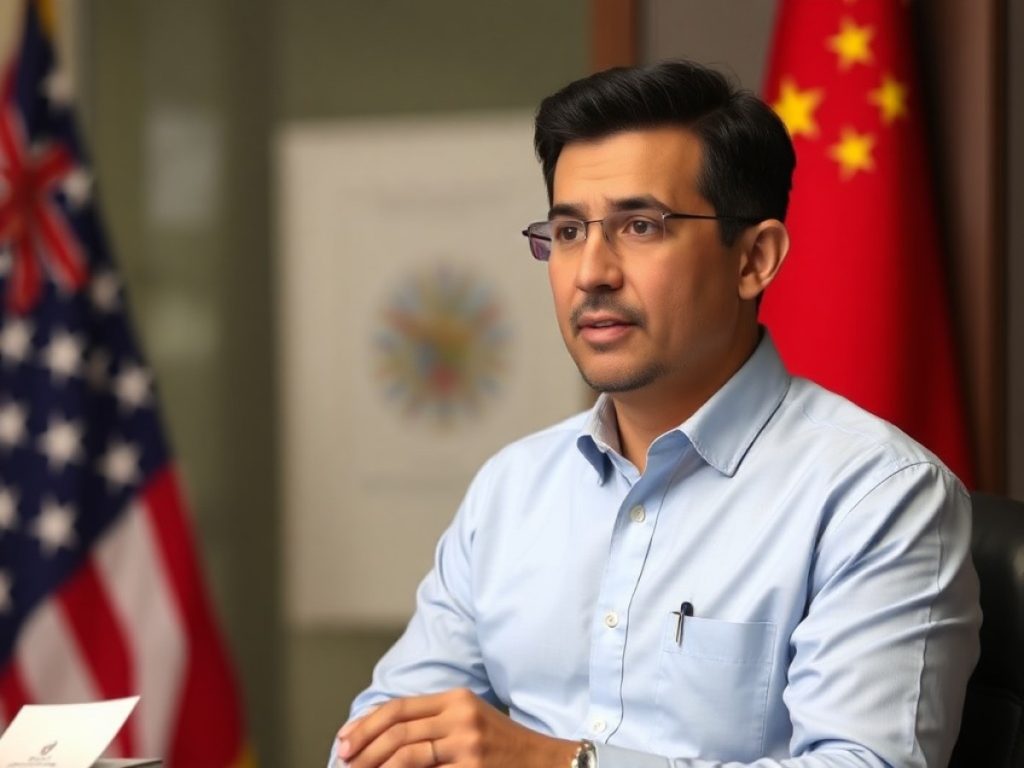
In a recent revelation that underscores the geopolitical tensions shaping international trade relationships, Uruguay’s Economy Minister Gabriel Oddone has brought to light the intense pressure the South American nation faces from the United States. During a confidential meeting with top business leaders, Oddone detailed how the U.S. is pushing Uruguay to sever its trade ties with China. This disclosure not only highlights the strategic maneuvers on the global trade chessboard but also places Uruguay at a crossroads that could define its economic future.
The pressure from Washington comes at a time when Uruguay’s economic growth is faltering, with projections falling short of expectations. China, as Uruguay’s largest trading partner, plays a crucial role in its economy, being a major market for its exports such as beef, soybeans, and cellulose. The situation presents a complex challenge for Uruguay, balancing between its significant trade relationships and the geopolitical demands from one of the world’s superpowers.
Unveiling the Pressure: A Closer Look at U.S. Tactics
During the private meeting with more than twenty business chamber leaders, Economy Minister Oddone described the pressure from the United States as both “unimaginable” and “unsustainable.” These discussions, which occurred over two hours, were not just a routine briefing but a strategic dialogue at Uruguay’s Technological Laboratory. The U.S. insists on daily engagement across various channels, pushing Uruguay to rethink its alliances, particularly with China.
Domestic Challenges Amid Global Tensions
The internal economic scenario in Uruguay adds another layer of complexity to the situation. With a growth rate of 1.8% in 2025, significantly lower than the forecasted 2.6%, and a further reduced projection for 2026, the local economic climate is tightening. Oddone admitted the country’s limited wiggle room, pressured by an inherited fiscal situation and internal coalition disputes over necessary reforms.
At the meeting, which also saw heated moments, the private sector voiced concerns over what they perceive as a bloated and sluggish state apparatus. In response, Oddone urged them to see the “glass half full,” highlighting the growth amidst a challenging international environment.
Economic Strategies and Political Responses
The dialogue extended to discussions on making Uruguay’s economy more competitive not through devaluation but through microeconomic changes that aim to streamline and reduce costs related to foreign trade. Additional measures to protect local commerce from cross-border competition with Argentina were also discussed.
- Enhanced microeconomic changes for competitiveness
- Targeted measures to protect local businesses
- Streamlined processes to reduce foreign trade costs
Stakeholder Reactions and Minister’s Stance
The meeting wasn’t just about laying out the challenges; it also featured a robust exchange with stakeholders like Rafael Normey, president of the Rural Federation, who criticized the government for not fostering a better environment for private investment. Oddone’s response was a call to action, challenging them to propose solutions and consider their roles in navigating these troubled waters.
Despite the minister’s refusal to comment publicly on the meeting, describing it as a private event, it was clear that the discussions left a mixed taste—some attendees felt reassured by the government’s candor, while others remained skeptical about the path forward.
Geopolitical Realities and Future Directions
The balancing act that Uruguay must perform is emblematic of the broader geopolitical struggles facing many smaller nations caught between major powers like the U.S. and China. As tensions escalate, particularly under the Trump administration’s aggressive tariff policies, countries like Uruguay must navigate these turbulent waters carefully, leveraging their strategic strengths while safeguarding their economic interests.
Oddone’s concluding remarks at the meeting, filled with a mix of optimism and realism, underscored the resilience and strategic acumen that Uruguay will need to employ as it confronts these international pressures. “Believe me, we are going to do well,” he asserted, rallying the country’s business leaders and policymakers to unite in navigating the complex global landscape.
Similar Posts
- Uruguay’s Economy Chief Optimistic: EU-Mercosur Trade Deal May Soon be a Reality!
- Uruguay’s Economy Minister Alarmed: Success Could Be Too Much to Handle
- IMF Chief Lands in Montevideo: High-Stakes Economic Talks Begin with Orsi
- Trump Slashes Tariffs on China: Breakthrough Deal with Xi Jinping
- Trump-Xi Summit: Trade, Iran, Taiwan Top Agenda as Leaders Meet in Beijing

Gavin Turner is a crypto market analyst with over seven years studying price fluctuations and trading volumes in the United States. He provides detailed reports on sector trends and key indicators to help you anticipate market moves. His rigorous methodology and reliable forecasts guide you in refining your crypto trading strategies.