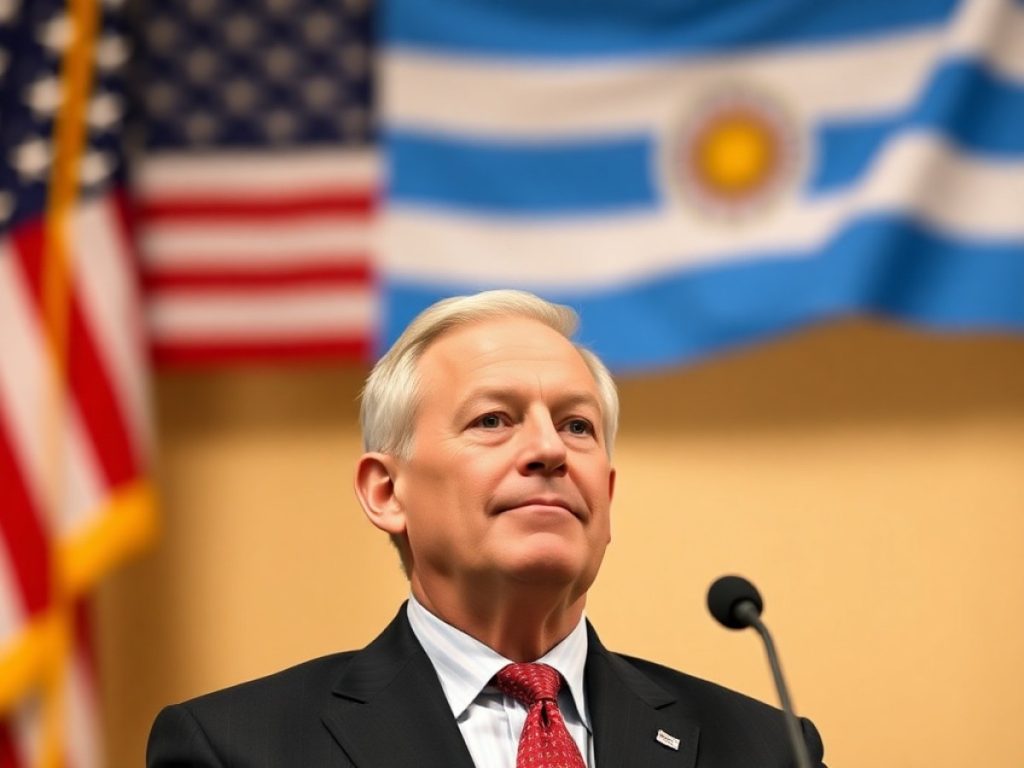
In a dynamic unfolding of international finance and politics, U.S. Treasury Secretary Scott Bessent recently heralded the strengthening ties between the United States and Argentina, specifically praising Argentine President Javier Milei. This commendation comes in the wake of a significant currency swap deal, which Bessent staunchly defended as a strategic alignment critical to both nations’ economic stability. The unfolding events underscore a palpable shift in Latin American politics, with potential ripples across global markets and international relations.
Beyond mere financial transactions, these developments carry a deeper political resonance. Bessent’s remarks, delivered during an interview with Argentine media outlets La Derecha Diario and RAV Español, painted a picture of a burgeoning partnership. Milei, once celebrated as a formidable thinker, is now emerging as a pivotal political figure, central to the U.S.’s broader strategy in the region. However, this alignment has not been without its controversies, especially given the turbulent economic backdrop of Argentina and speculative assertions about market manipulations aimed at political ends.
The Substance of the U.S.-Argentina Financial Deal
The agreement at the heart of this geopolitical dance involves a substantial US$20 billion currency swap between the U.S. and Argentina’s central bank. This maneuver is designed as a financial stabilizer, a lifeline thrown to Argentina amidst its ongoing currency struggles. Bessent was quick to clarify that this was not a giveaway but a calculated loan:
– **Loan Details**: It was emphasized that the U.S. was not merely handing over funds but provided a loan aimed at economic stabilization.
– **Financial Returns**: According to Bessent, the arrangement proved profitable for the U.S., dismissing criticisms of the deal as a one-sided benefit.
– **Repayment**: Reports, including those from Reuters, noted that Argentina has already repaid US$2.5 billion of the loan, underscoring a commitment to fiscal responsibility.
Political Implications and Regional Influence
Economic Strategies and Political Alliances
The currency swap is not merely a financial agreement but a signifier of deepening political alliances. Bessent’s discussion highlighted several key aspects:
– **Support for Milei**: Bessent’s praise for Milei underscores a strong personal and political connection that could influence broader regional dynamics.
– **Strategic Realignment**: By strengthening ties with Argentina, the U.S. is possibly looking to pivot South American political landscapes more favorably towards its policies and interests.
Domestic and International Reactions
Within Argentina, the deal has sparked a spectrum of reactions:
– **Government Defense**: The current Argentine administration defends the swap as crucial to containing financial instability and pushing forward a reformative agenda.
– **Criticism and Scrutiny**: Opposition voices and economic analysts in Argentina have raised concerns about the potential political costs of this deepening alignment with the U.S., questioning the long-term implications of such economic interventions.
As these events continue to unfold, the strategic partnership between the U.S. and Argentina is set to reshape not only their bilateral relations but potentially the political and economic landscape of Latin America. With financial strategies deeply intertwined with political maneuvers, the global community watches closely, awaiting the next moves in this high-stakes geopolitical chess game.
Similar Posts
- US Steps In With Argentine Pesos to Save Milei from Crisis: A Bold Move Against Acute Illiquidity
- Argentina Lauded for Rapid Swap Repayment: Bessent Commends Fiscal Responsibility
- Argentina and US Seal Major Currency Swap Deal: Economic Implications Explained!
- Argentine Economy Crisis: Minister Seeks Urgent Aid from Bessent and Georgieva
- Milei in Talks for Major Washington Bailout: Negotiations Underway

Gavin Turner is a crypto market analyst with over seven years studying price fluctuations and trading volumes in the United States. He provides detailed reports on sector trends and key indicators to help you anticipate market moves. His rigorous methodology and reliable forecasts guide you in refining your crypto trading strategies.